
Last updated November 21, 2026
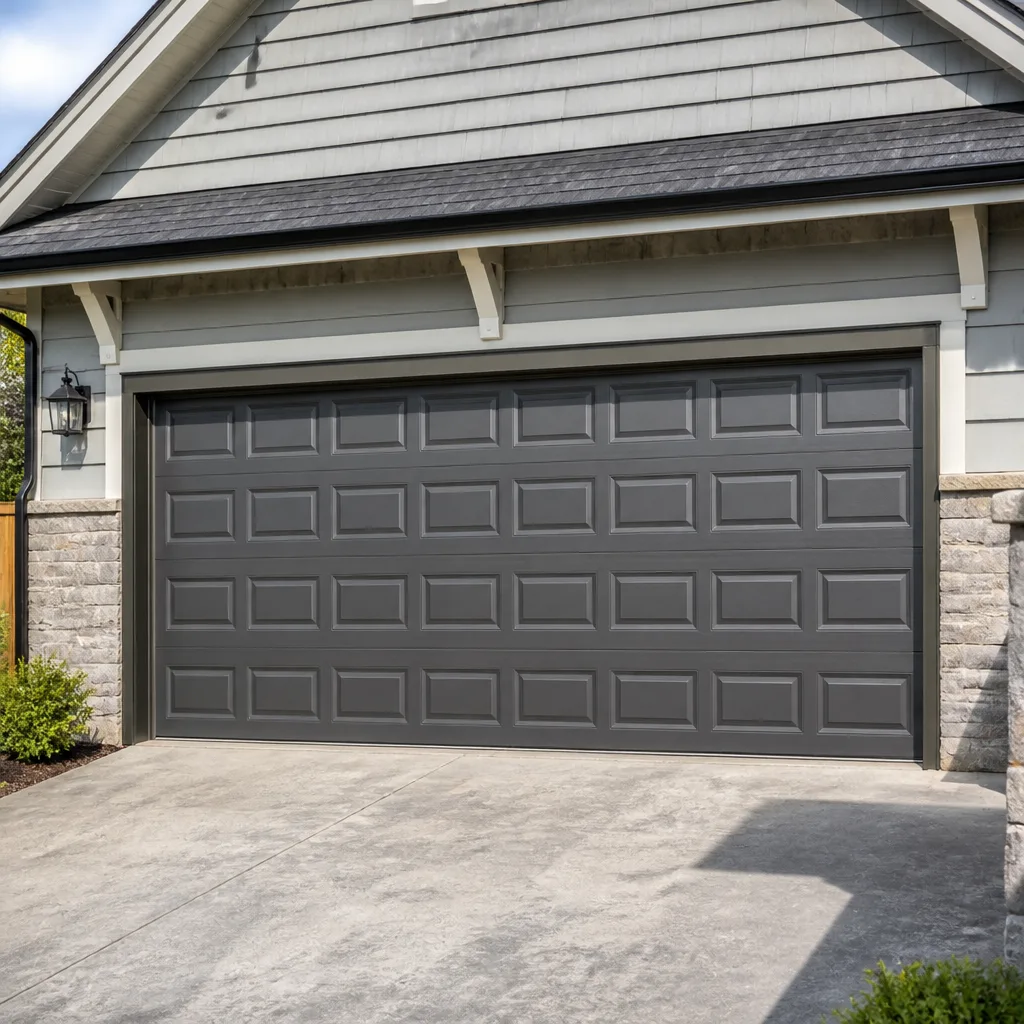 Raised-panel steel
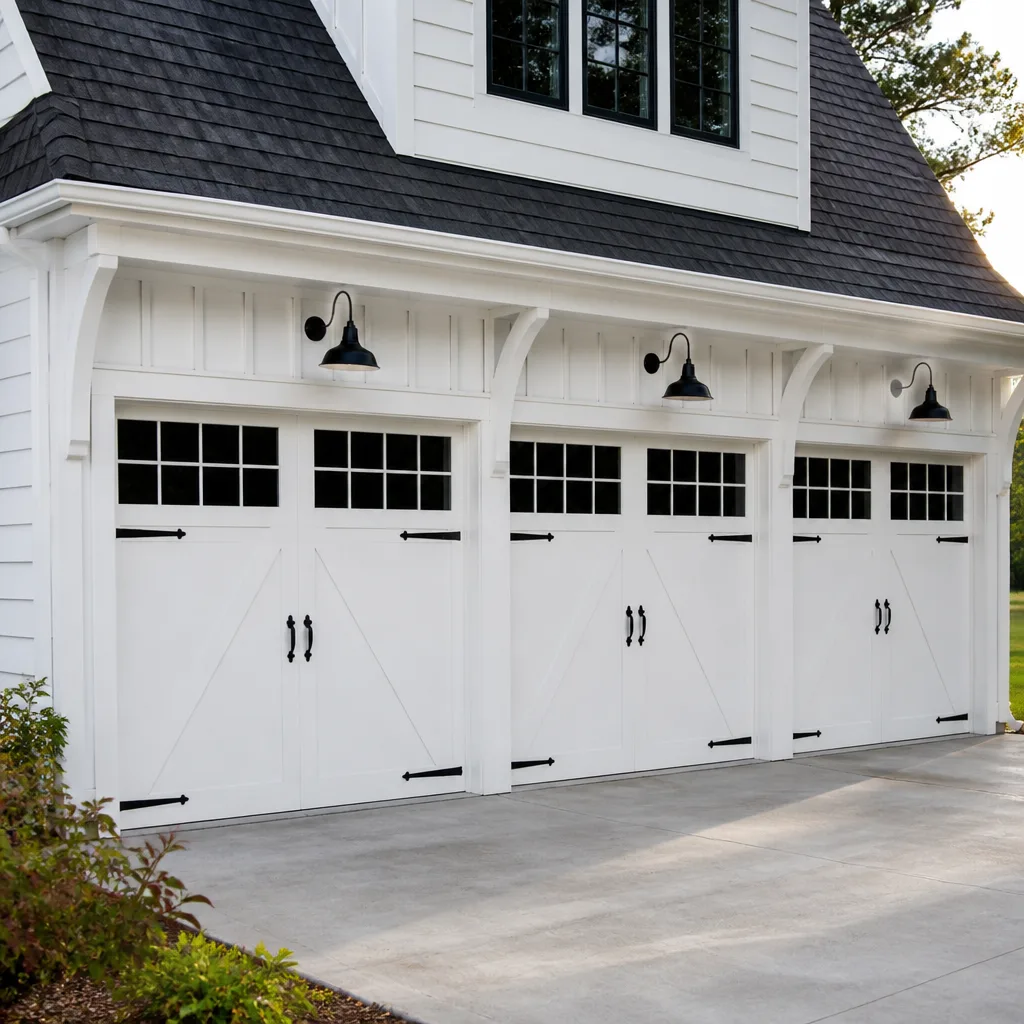 Carriage house
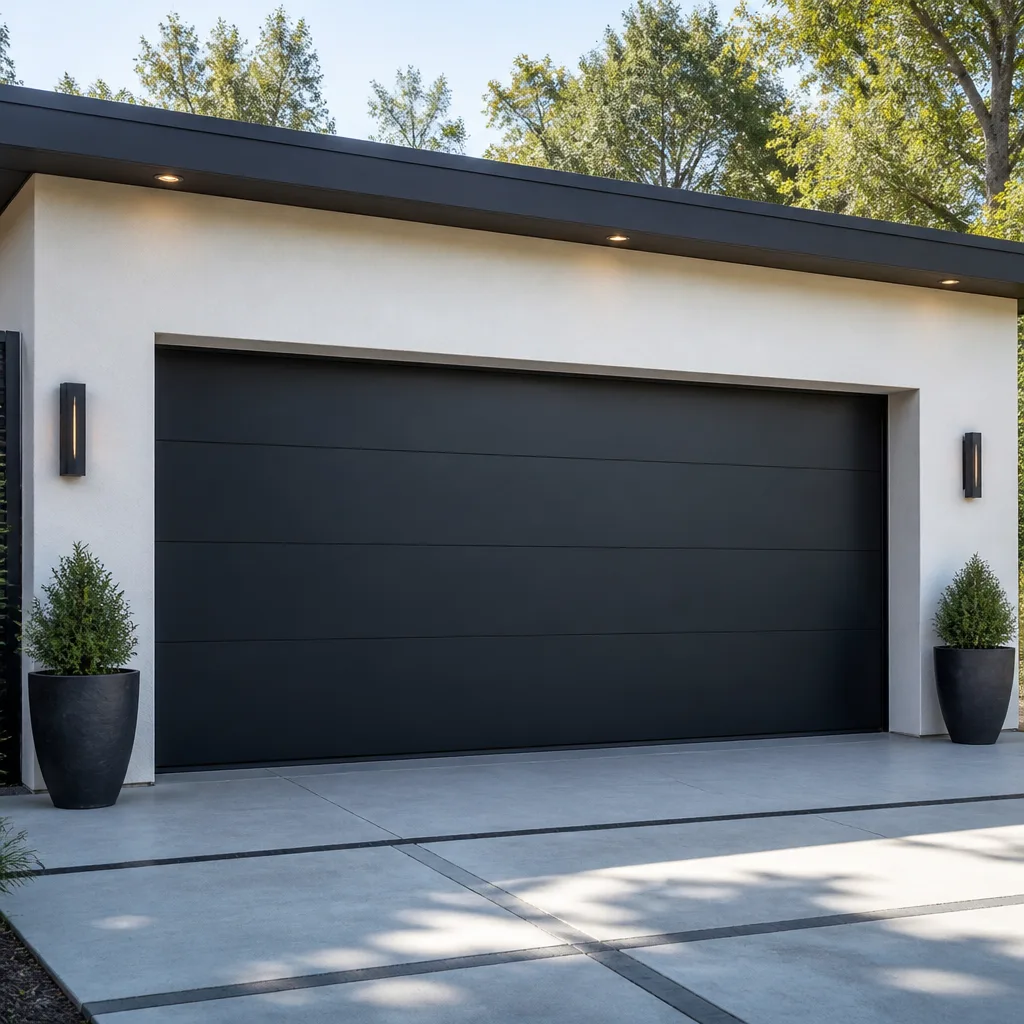 Modern flush
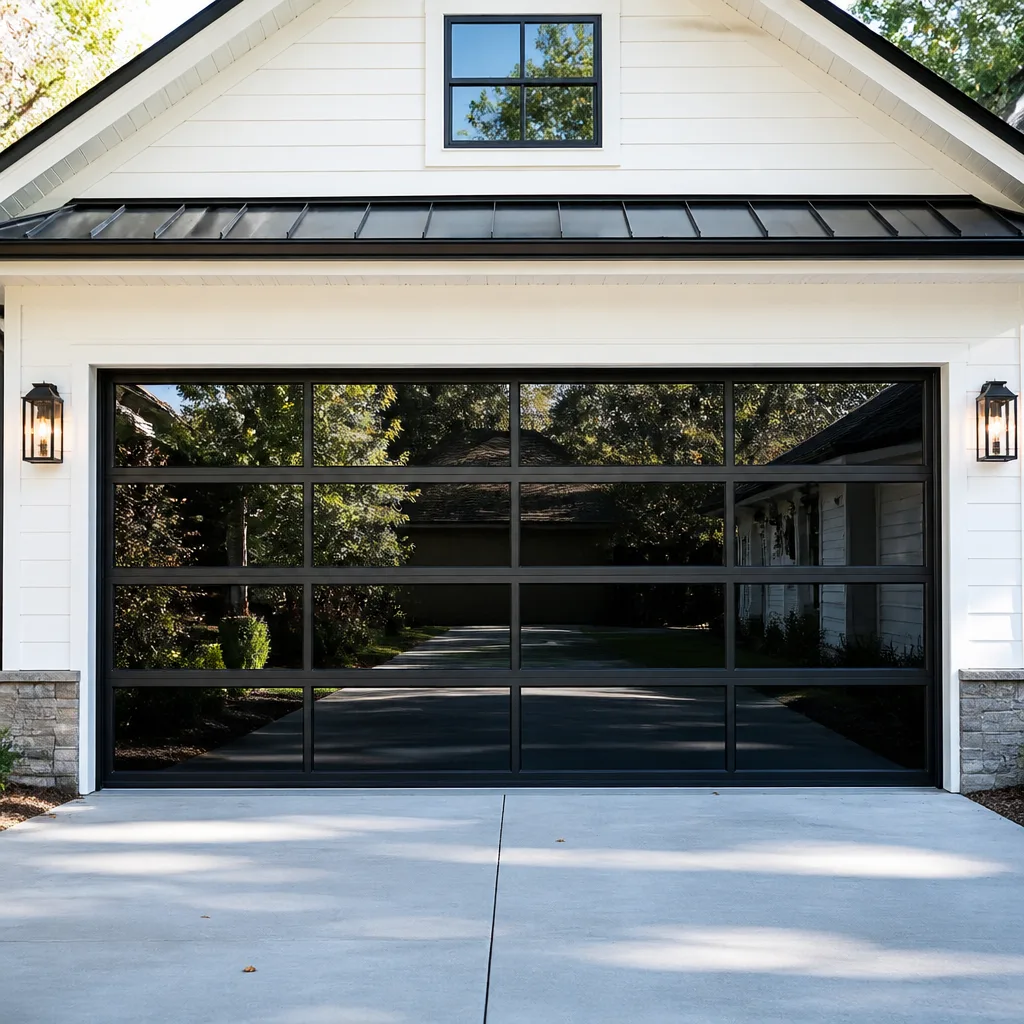 Full-view glass
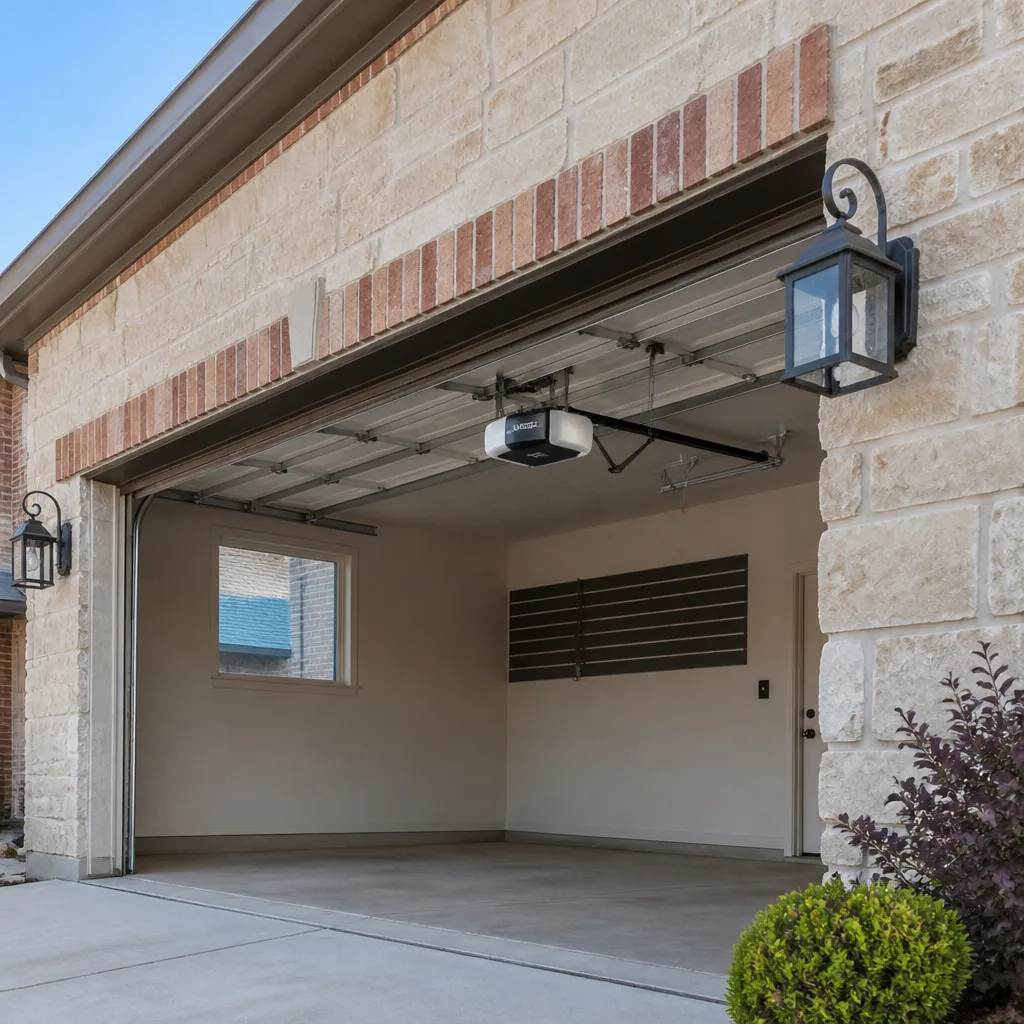 LiftMaster openers
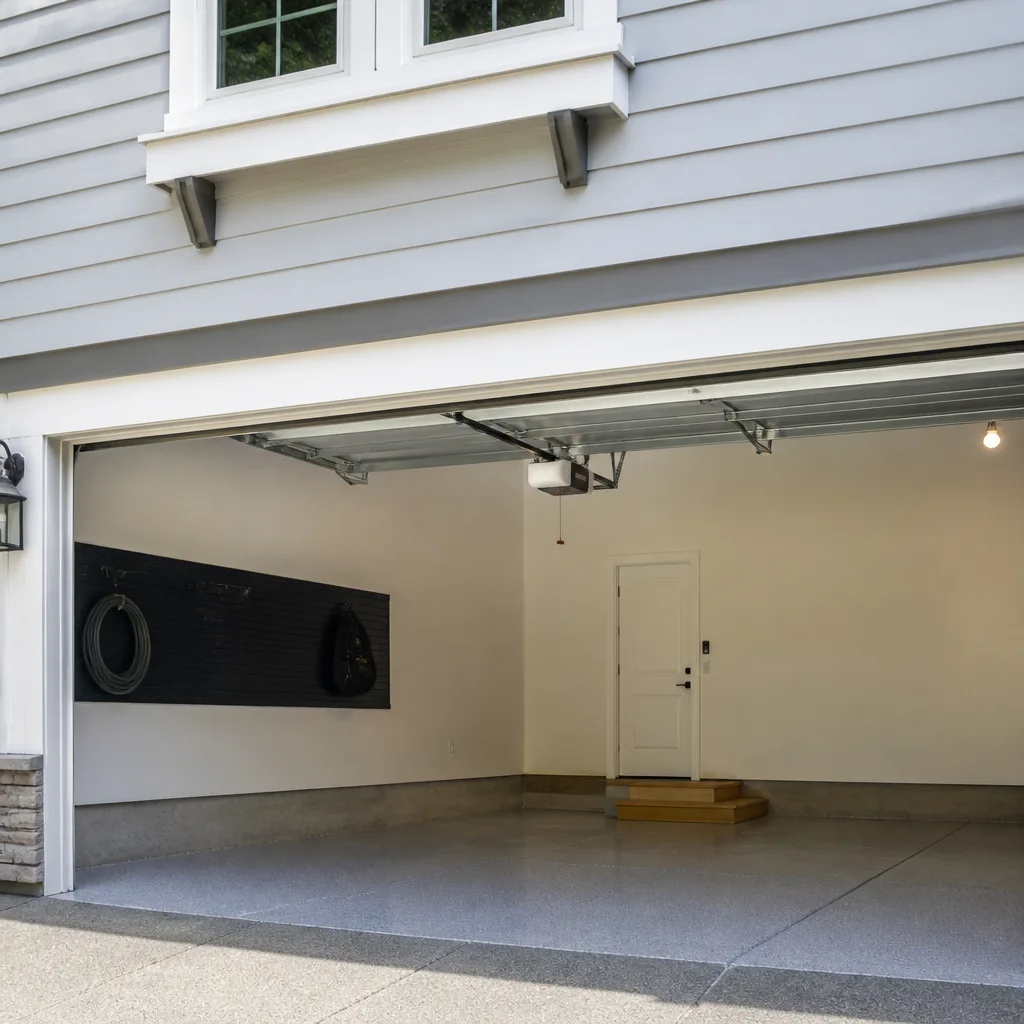 Chamberlain openers
Full 25-point door and opener safety check with every visit - springs, cables, rollers, tracks, and your LiftMaster or Chamberlain opener included
You get a price before we start. It does not change when the pro arrives.
Get your free estimateDIY vs Professional Garage Door: The Dayton Homeowner’s Decision Guide
Most homeowners assume the split between DIY and professional work comes down to confidence or mechanical skill. It doesn’t. It comes down to stored energy. A torsion spring holds a live, wound force that can release in a fraction of a second when a winding bar slips or a winding cone isn’t seated right, and that force doesn’t care how careful you are. The tasks that carry that kind of asymmetric risk belong in the professional column no matter how handy you are. The tasks that don’t, you can absolutely own. This guide draws that line for you, task by task, with the Ohio rules, the real cost math, and the troubleshooting steps that make a service call shorter and sharper.
Quick Answer
For Dayton homeowners, the honest split is this: weatherstripping, lubrication, sensor alignment, and light track adjustment are safe DIY ground. Spring work, cable replacement, and any new wiring at the opener or the wall control belong with a trained technician because the stored energy and the electrical exposure can cause serious injury. Everything in between depends on your specific door, your opener’s firmware access, and whether the fix is a genuine adjustment or a symptom of a worn component.
Styles & brands we work with
- Raised-panel steel
- Carriage house
- Modern flush
- Full-view glass
- LiftMaster openers
- Chamberlain openers
Table of Contents
- What You Can Safely Do Yourself
- What Requires a Technician
- Is Your Opener DIY-Firmware-Updatable?
- Ohio’s Homeowner Exemption and Where It Stops
- Real Cost: DIY Parts vs. Professional Installed
- Pre-Repair Troubleshooting That Narrows the Diagnosis
- How Dayton Weather and Housing Shape Garage Door Wear
- Common Mistakes to Avoid
What You Can Safely Do Yourself
These tasks involve no stored spring energy, no line voltage, and no lifting of the door’s full weight. They’re the everyday upkeep that keeps a door quiet, sealed, and predictable in Dayton’s freeze-thaw cycles.
- Weatherstripping replacement. The rubber or vinyl seal along the bottom and sides wears out from sun, cold, and friction. Cutting a new bottom seal to width and sliding it into the retainer is a straightforward homeowner job. It’s also one of the highest-payoff tasks in this climate, because a torn bottom seal lets cold air, snowmelt, and mice into the garage all winter.
- Safety sensor alignment. If the door reverses or won’t close, the culprit is often a bumped or dirty photo-eye. Wipe the lenses, check that the sending and receiving units point at each other, and confirm the indicator lights are solid rather than blinking. A small bracket nudge usually fixes it.
- Lubrication. A garage door is a seasonal maintenance item here. Hinges, rollers, and the torsion shaft bearings benefit from a garage-door-rated lubricant (not WD-40, which is a solvent, not a lube) applied a couple of times a year. Do not lubricate the tracks themselves; that attracts grit.
- Light track adjustment. If a track has been tapped out of square by a bumper or a bike, a gentle realignment with a rubber mallet can restore smooth travel. If the track is bent, cracked at the fasteners, or visibly bowed, stop: that’s a technician job.
- Cleaning and inspection. Wiping panels, clearing debris from the tracks, and looking for frayed cables or loose bolts gives you a running picture of the door’s health. You’re not fixing anything, just keeping the diagnosis current.
Everything on that list is maintenance and adjustment. Nothing on it requires you to defeat a spring or reach inside the opener’s wiring.
What Requires a Technician
These tasks carry genuine risk of serious injury or electrical shock, and they’re exactly where we see the most callbacks from DIY attempts. We treat spring repair as a defined specialty rather than a side task, and there’s a reason for that.
- Torsion spring replacement or adjustment. The spring above the door stores enough energy to lift the door, and when a winding bar slips or a cone lets go, that energy goes wherever it’s pointed. This is the single most dangerous garage door task. It also requires the correct spring size for the door’s weight, and getting the size wrong means the door either slams or won’t open at all.
- Extension spring work. Older Dayton homes often have the extension springs mounted above the horizontal tracks rather than a torsion bar. These fail differently, and the cables and anchors that hold them need to be checked at the same time. We handle both torsion and extension systems.
- Cable replacement. Cables are under tension every minute the door is up. A cable that’s frayed or jumped a drum is a technician call. Never cut a cable to relieve tension.
- Opener wiring and wall control installation. New wall controls, photo-eyes, and any line-voltage work at the opener involve the household electrical supply. That belongs with a licensed technician, and it’s a good moment to check that your opener is protected correctly.
- Spring-sized balancing and door weight. If the door feels heavy or won’t stay halfway up, the spring is sized wrong or failing. Adjusting it without the right scale and the right tools is how people get hurt.
If you’re not sure which column a problem belongs in, that’s the point where a diagnostic visit pays for itself. Our team of technicians with up to 12 years of experience can tell you in a few minutes whether it’s an adjustment or a component.
Is Your Opener DIY-Firmware-Updatable?
This is where smart opener owners most often get the DIY/professional call wrong, and it’s worth its own section. The question isn’t whether the opener is “smart.” It’s whether the manufacturer gives you firmware access at the homeowner level.
Some modern openers, including models from LiftMaster and Chamberlain, support firmware updates and Wi-Fi reconnection through the manufacturer’s homeowner app or a bridge accessory. For those, resetting the connection, re-adding the opener to your network, and applying an update are usually things a homeowner can complete.
Others don’t expose the firmware at all. The update path runs through dealer or professional diagnostic tools, and the app can only manage routine settings. If your opener is in that group, chasing the update yourself is time spent in a loop.
Here’s the practical test:
- Check whether the manufacturer’s homeowner app lists a firmware version and an update option. If you see a version number, you have access. If you see nothing, you likely don’t.
- Look for a “learn” or “reset” button inside the opener housing. That resets the radio, not the firmware. It won’t push an update.
- Check the wall control for diagnostics. Many legacy platforms, including Genie and Craftsman models, store fault codes that only display through diagnostic tools.
When in doubt, the honest answer is to let a technician run diagnostics. We work on LiftMaster, Chamberlain, Genie, Craftsman, and the rest of the major platforms, so we arrive already familiar with the quirks of your specific system rather than learning it on your driveway. If your opener is failing intermittently, that’s a separate problem from firmware, and it’s worth reading our guide to garage door opener repair before you assume the motor is gone.
Ohio’s Homeowner Exemption and Where It Stops
Ohio exempts the owner of a single-family home from the state contractor licensing requirement when that owner does work on their own residence. In plain terms: you don’t need a state contractor license to fix your own garage door. This is why DIY is legal as far as the state is concerned, and why the question is one of safety and outcome, not legality.
What the exemption doesn’t cover:
- Work you perform for anyone else. Help a neighbor replace a spring for gas money and you’re no longer the homeowner doing work on their own home. That can cross into unlicensed contracting.
- Rental property you don’t occupy. If you own a duplex or a rental and don’t live in the unit you’re working on, the single-family owner exemption generally won’t protect you. Property managers should treat repair work as professional work.
- Local permits and code. A garage door spring replacement typically doesn’t require a permit, but an opener’s electrical circuit or structural changes at the header might. Dayton-area permitting rules vary by jurisdiction, so the right move is always to call your city’s building department and ask about your specific job rather than assume.
- Homeowners association rules. Many Dayton-area HOAs have their own requirements for door replacement style and color, and those can trip up a job well after it’s installed.
The exemption decides who is allowed to do the work. It says nothing about who should. The safety physics of a torsion spring don’t change because the work is legal.
Real Cost: DIY Parts vs. Professional Installed
The cost comparison most homeowners make is parts versus labor. The comparison that actually matters includes the callback. A DIY spring replacement that’s close but not right often results in a door that binds, an opener that strains, or a second round of parts when the first set is the wrong size. That’s where the math flips.
Here’s a rough framing of the two columns, keeping in mind that any figures are typical estimate ranges and the written quote is what sets your actual price:
| Task | DIY: parts + your time + risk | Professional installed |
|---|---|---|
| Bottom weatherstripping | Low parts cost, a couple of hours, minimal risk | Not worth a service call unless you want it done with the season’s tune-up |
| Safety sensor alignment | Free if it’s just cleaning and aiming | Usually priced as part of a diagnostic visit |
| Lubrication and tune-up | A few dollars in lubricant | Low-cost visit if bundled with other work |
| Torsion spring (single) | Parts are inexpensive, but the risk is high and sizing errors are common | Quoted per job, single spring; a matched pair is usually replaced together at roughly double |
| Extension spring (single) | Same risk profile as torsion, different hardware | Quoted per job, single spring; pair replacement roughly double |
| Cable replacement | Parts available, but tension makes this a technician task | Quoted per job |
| Opener diagnostics | Limited to what the app exposes | Quoted per job, often resolved in one trip with the right tools |
Notice what the DIY column leaves out: the callback. When a DIY spring job goes wrong, the cost isn’t the spring. It’s the damaged door, the strained opener, and the technician visit to fix the first attempt. In our experience, the reason a spring repair is priced as a specialty is that the labor is the whole job. The parts are the cheap part.
The other thing to know: the price you’re quoted is agreed before any work starts. The written estimate sets the final price, and the free estimate means you can compare the real number to your own parts-and-time list rather than guess. If you’d like a number for your specific door, our garage door repair team can quote it.
Pre-Repair Troubleshooting That Narrows the Diagnosis
Before you call anyone, five minutes of observation can cut down the diagnostic time and make the first visit more productive. You’re not fixing anything here. You’re gathering information that points a technician straight at the right component.
- Watch the door’s travel. Note exactly where it stops, binds, or reverses. “Won’t close” and “closes halfway then reverses” point to different problems.
- Listen for the opener. A hum with no movement is different from a click with no movement, which is different from a motor that runs but doesn’t turn the chain. Write down what you hear.
- Test the balance. With the door closed and the opener disconnected by its emergency release, lift the door about halfway by hand. It should hold. If it falls or feels very heavy, the springs are the suspect. Don’t adjust anything, just note it.
- Check the sensors. Look at the indicator lights on both photo-eyes and confirm nothing is blocking the path. This alone resolves a large share of “door won’t close” calls.
- Look for visible wear. Frayed cables, a sagging panel, a visibly bent track, or a spring with a visible gap in the coil. Photograph anything that looks wrong.
- Note your opener brand and model. This matters because technicians arrive already trained on the major platforms. If your door says LiftMaster, Chamberlain, Genie, or Clopay, we already know the tolerances your system expects.
That list takes about five minutes and gives the technician a map. It’s also a good preventive habit, because it keeps you aware of the small changes that precede a failure.
See the difference
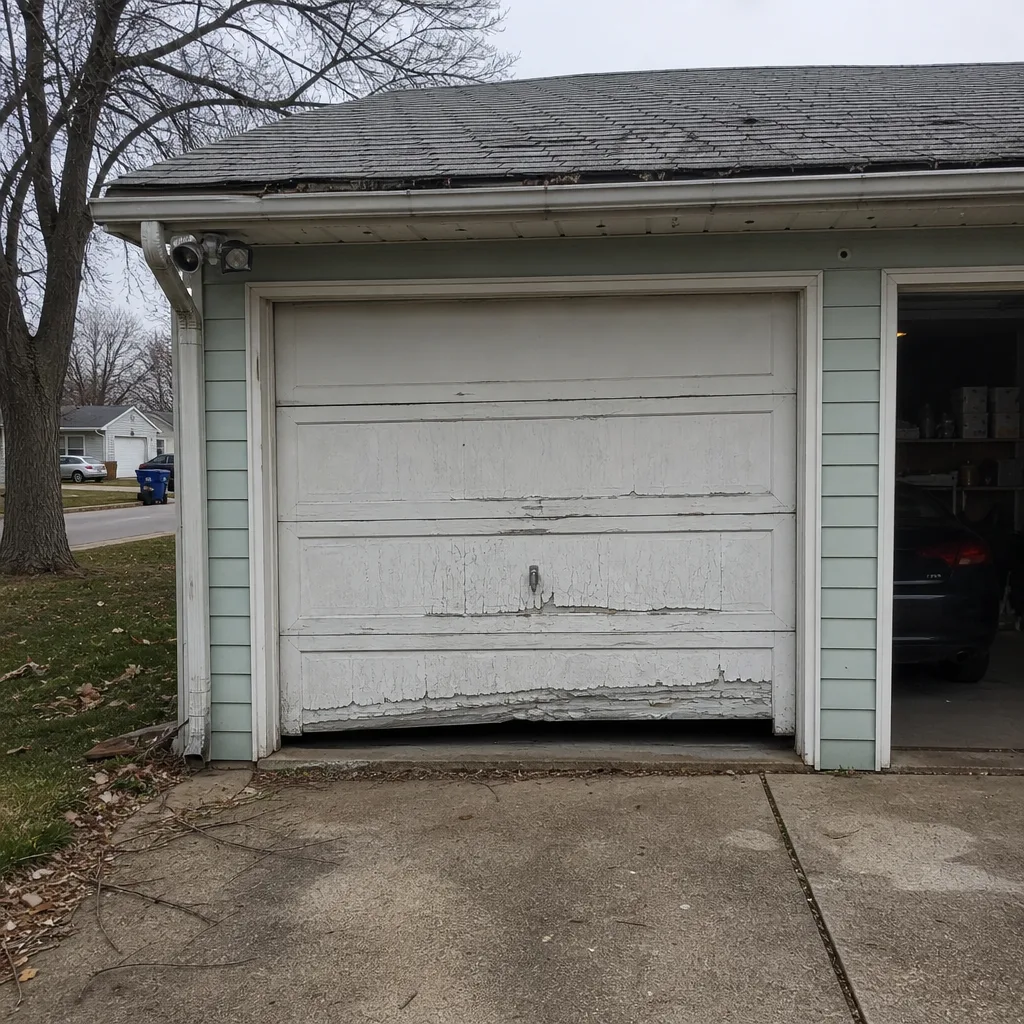 Before
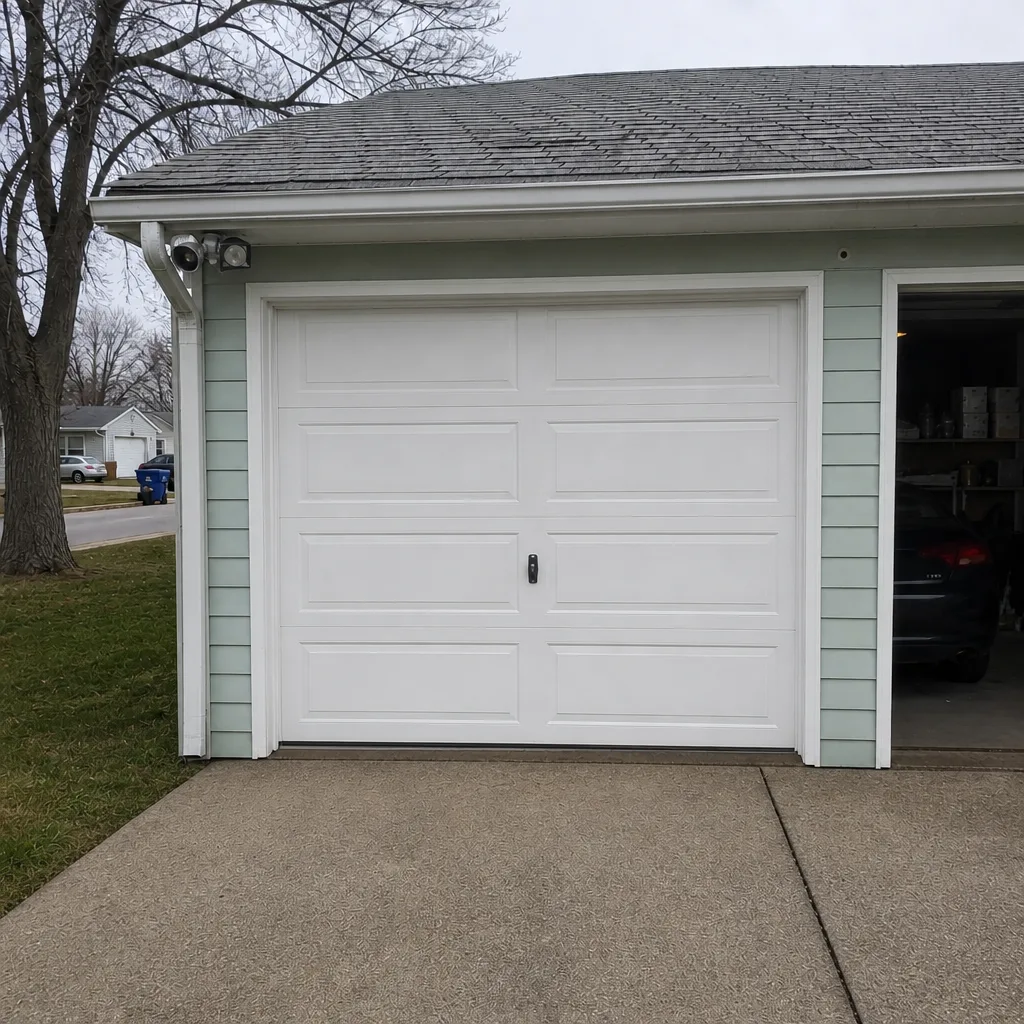 After
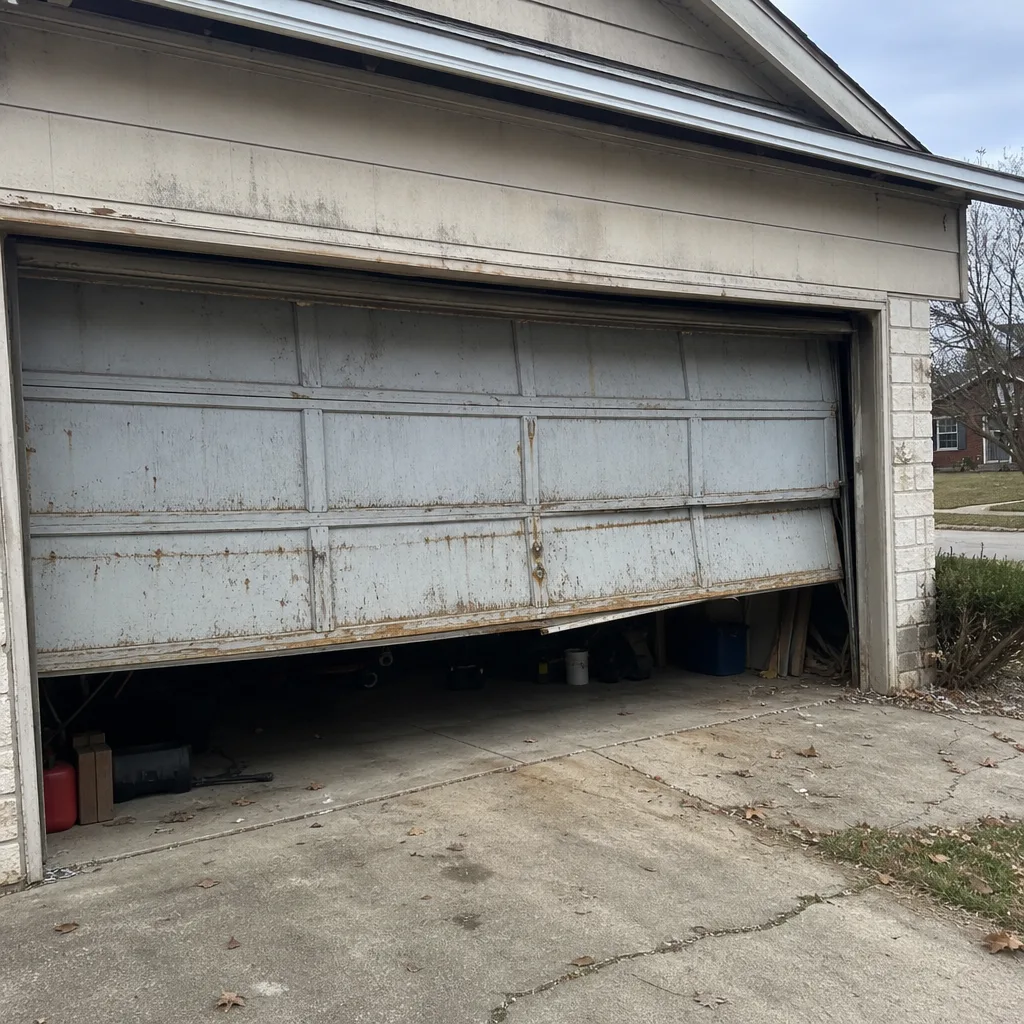 Before
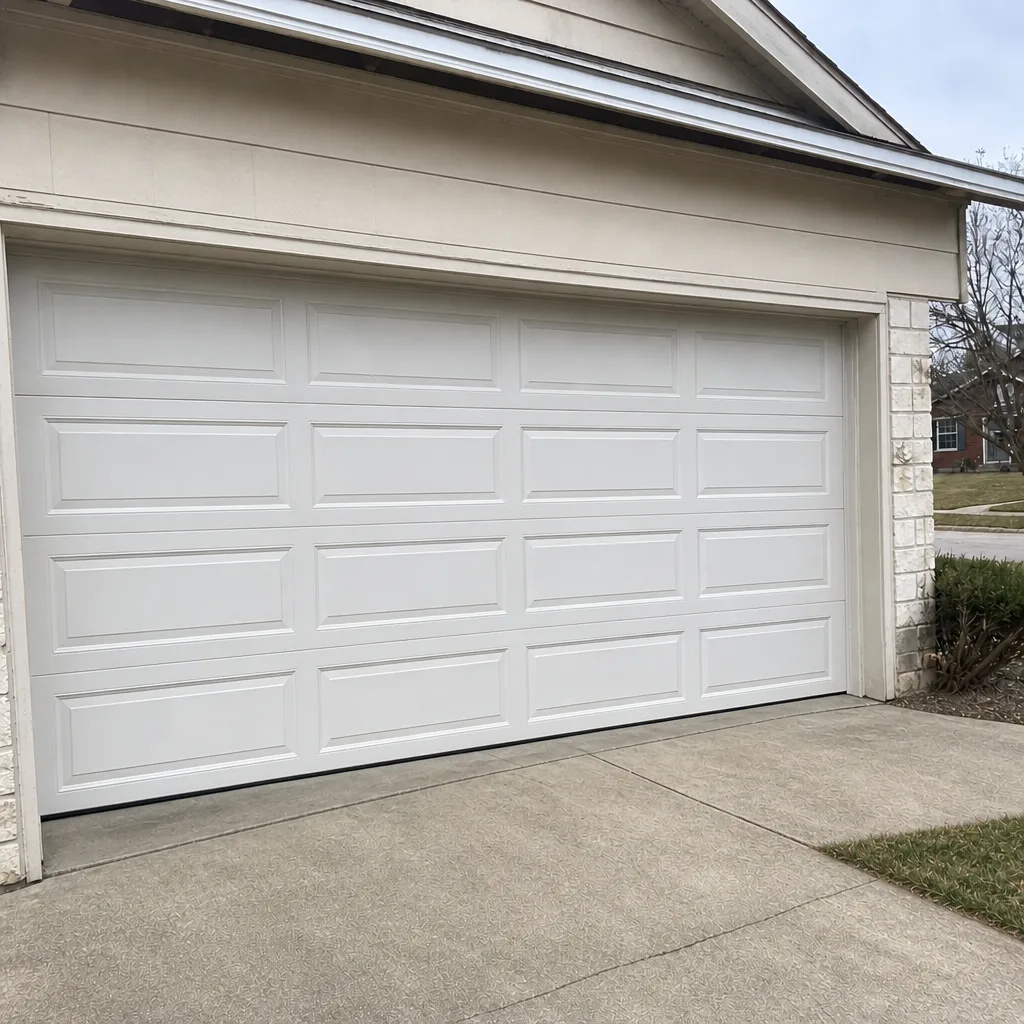 After
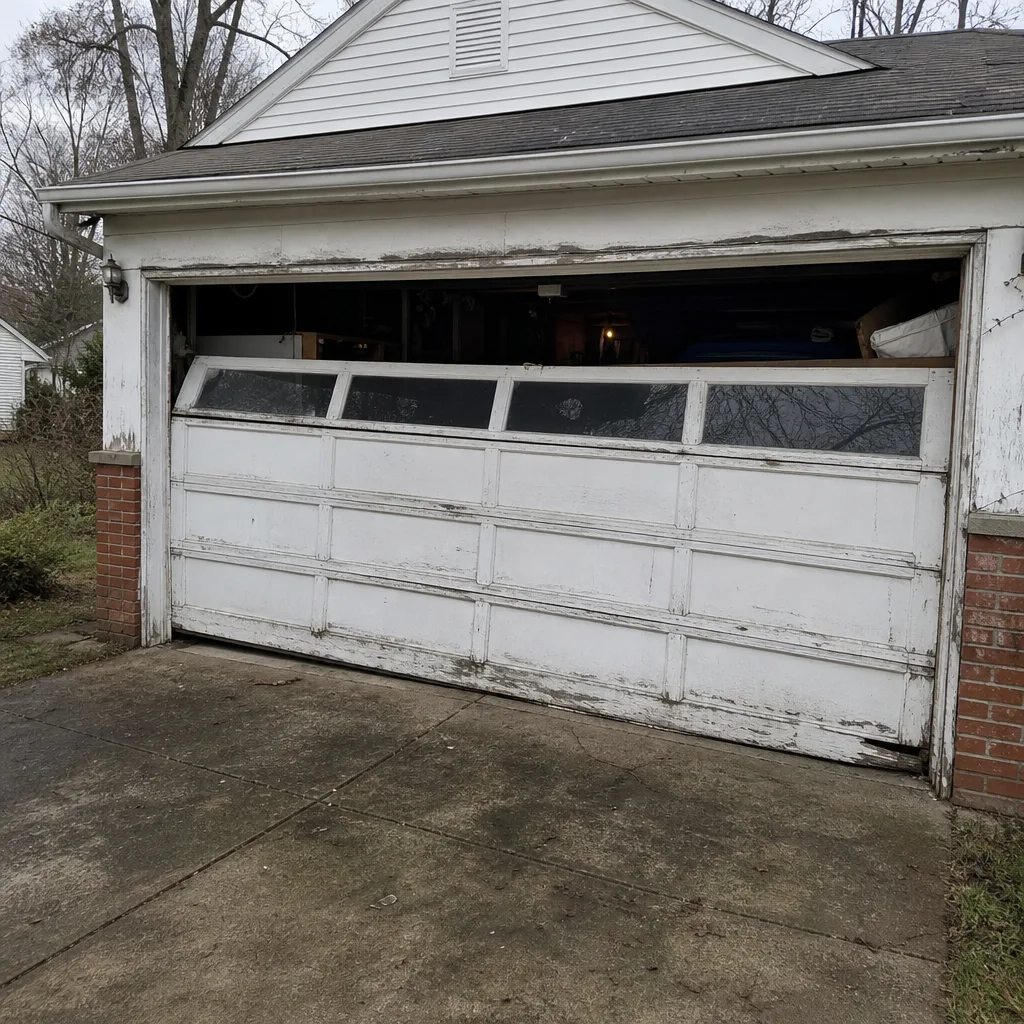 Before
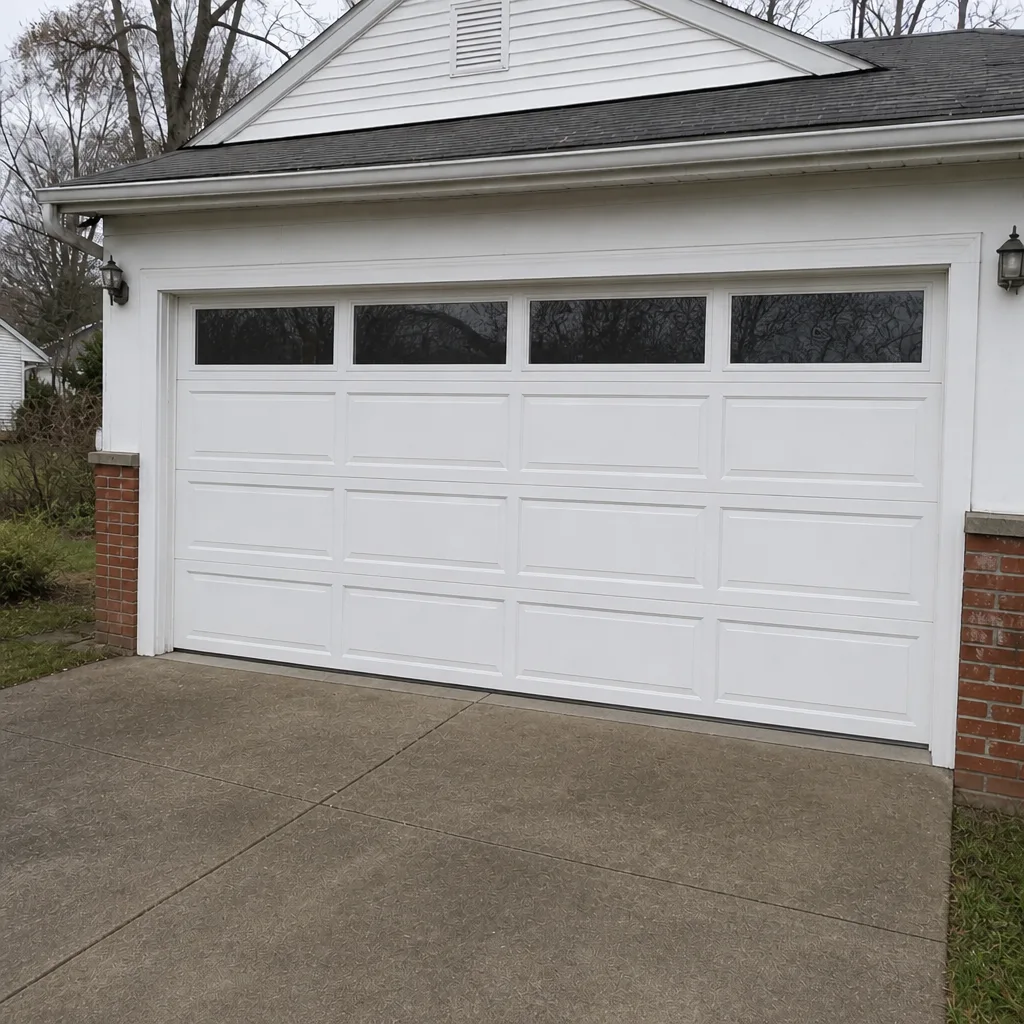 After
How Dayton Weather and Housing Shape Garage Door Wear
Dayton’s winters are the real driver of garage door wear here. The freeze-thaw cycles we get from late fall through early spring push a door’s moving parts through an expansion-and-contraction loop dozens of times. That’s why lubrication schedules matter more in this climate than in milder ones, and why bottom seals tear faster here than homeowners expect.
The housing stock matters too. Older neighborhoods throughout the Dayton area have original or near-original garage doors, and many carry extension spring systems rather than the torsion setups on newer homes. Those springs are mounted above the horizontal tracks, and the cables and anchors that hold them age alongside the springs. When we look at a door in an older Dayton home, we’re checking the full system, not just the spring.
Older doors also pair with older openers. Legacy Craftsman and Genie units hold up well but show their age, and a failing opener on a 20-year-old door is a different decision than a failed opener on a newer system. Sometimes the honest answer is a repair. Sometimes it’s a full door replacement. We offer both, so there’s no need to call a second company when a repair reveals a larger need. If the door has reached that point, our garage door installation overview walks through what a replacement involves.
Daily Habits That Reduce Repairs
The biggest lever on garage door longevity is how you use it, not how often you service it. A handful of small habits keep a door out of the callback column.
- Don’t stop the door mid-travel. Let it complete its full open or close cycle whenever possible.
- Keep the tracks clear of leaves, grit, and small toys. A single pebble in a roller track does more damage than a season of use.
- Never let the door reverse on an obstruction repeatedly. The opener’s force setting is meant as a backup safety, not a routine operation.
- Check your force and travel settings after any adjustment. A door that seems to “push through” resistance is straining the opener.
- Watch your door during severe weather. A door that shifts or vibrates against the frame during a storm is a sign to inspect.
These habits cost nothing and add serious life to a door and opener. They also make the diagnosis easier when something does fail, because a well-maintained door fails in recognizable ways.
Common Mistakes to Avoid
- Cutting a torsion spring to relieve tension. That’s the single fastest way to convert a repair into an injury. If a spring is broken, don’t touch it. Call a technician.
- Using WD-40 on hinges and rollers. It’s a light solvent that evaporates and attracts grit. Use a garage-door-rated lubricant and reapply on a seasonal schedule, which in Dayton’s freeze-thaw climate usually means two times a year.
- Overtightening the bottom seal retainer. A seal that’s pinched won’t sit flat, and you’ll get drafts all winter. Fit it, then check the seal against the floor before you torque the fasteners.
- Ignoring the opener’s firmware access question. Many smart opener owners spend hours trying to force an update the app doesn’t support. Check whether your model exposes the firmware before you assume the opener is broken.
- Assuming spring failure means a full door replacement. A spring and a door are separate decisions. Confirm the panels, tracks, and header are solid before you price a replacement.
- Skipping the HOA and city checks if you’re replacing anything. Dayton-area permits and HOA rules vary by jurisdiction. Call the city’s building department and check your HOA documents before ordering a door.
- Replacing one spring and leaving its partner. Springs wear together, so a matched pair is usually replaced at the same time. Replacing one and leaving a tired partner in place is where the second visit comes from.
When to Call a Professional
Call a professional when the task involves a torsion or extension spring, a cable under tension, the opener’s wiring or line voltage, or a door that won’t stay balanced. Call even sooner if the door has become a safety issue: a door stuck open leaves the home exposed, and a door stuck closed traps a vehicle. Those are the situations we built our emergency response around, and we answer 24/7 with fast dispatch from 7am to 7pm, Sunday through Friday.
If you’re not sure which column your repair belongs in, that’s exactly what the free estimate is for. Dayton Garage Door Repair Pros offers free estimates in Dayton: call (866) 937-7781. If you’d rather start from the overview, our team at Dayton Garage Door Repair Pros can point you to the right next step.
Frequently Asked Questions
Technically, yes; safely, no, unless you have the training and the control tools. A torsion spring stores enough energy to cause serious injury when a winding cone slips, and getting the spring size wrong means the door won’t balance. In our experience, this is one task where DIY saves money on paper and costs more when it goes wrong. Call (866) 937-7781 for a free estimate.
Spring repair is quoted per job by the written estimate, with the price for one spring. A matched pair is usually replaced together, so a pair costs about twice the single-spring price. Because the estimate sets the final price and it’s agreed before any work starts, you’ll know the number before any tool touches the door. Call (866) 937-7781 for an exact quote; estimates are free.
Yes, in most cases. Ohio exempts the owner of a single-family home from the state contractor licensing requirement when doing work on their own residence, so a homeowner fixing their own garage door is generally covered. That exemption usually doesn’t cover work on a rental you don’t live in or work you do for someone else. Confirm any permit questions with your city’s building department.
Yes, same-day service is available, and we dispatch Sunday through Friday, 7am to 7pm. We answer 24/7, and a call outside dispatch hours is booked into the next opening. Our technicians have up to 12 years of experience and work on the major brands, including LiftMaster, Chamberlain, Genie, and Clopay. Call (866) 937-7781.
No. The written estimate you approve sets the final price, and we don’t start work until you’ve agreed to it. The estimate is free and is set per job, so the number on the page is the number you pay. Call (866) 937-7781 to book an estimate.
The local independent professionals we connect you with are licensed and insured as their state requires. Our technicians have up to 12 years of experience and are trained across the major garage door and opener brands. Call (866) 937-7781 to discuss your specific door.
The Bottom Line
DIY vs. professional garage door work isn’t about how skilled you are; it’s about which tasks carry an asymmetric risk profile. Weatherstripping, lubrication, sensor alignment, and light track adjustment belong in your column. Springs, cables, and opener wiring belong with a technician, because the stored energy and the electrical exposure can cause real harm. Use Ohio’s homeowner exemption to understand what’s legal, but decide based on what’s safe. The free estimate means you can compare the professional number to your own parts-and-time math without guessing. And five minutes of pre-repair troubleshooting makes whatever comes next faster.
If you’re weighing a repair against a replacement, or you’d like a written number before you decide, call (866) 937-7781. We answer 24/7, dispatch Sunday through Friday from 7am to 7pm, and the estimate is free.
Written by the team at Dayton Garage Door Repair Pros.