
Last updated November 21, 2026
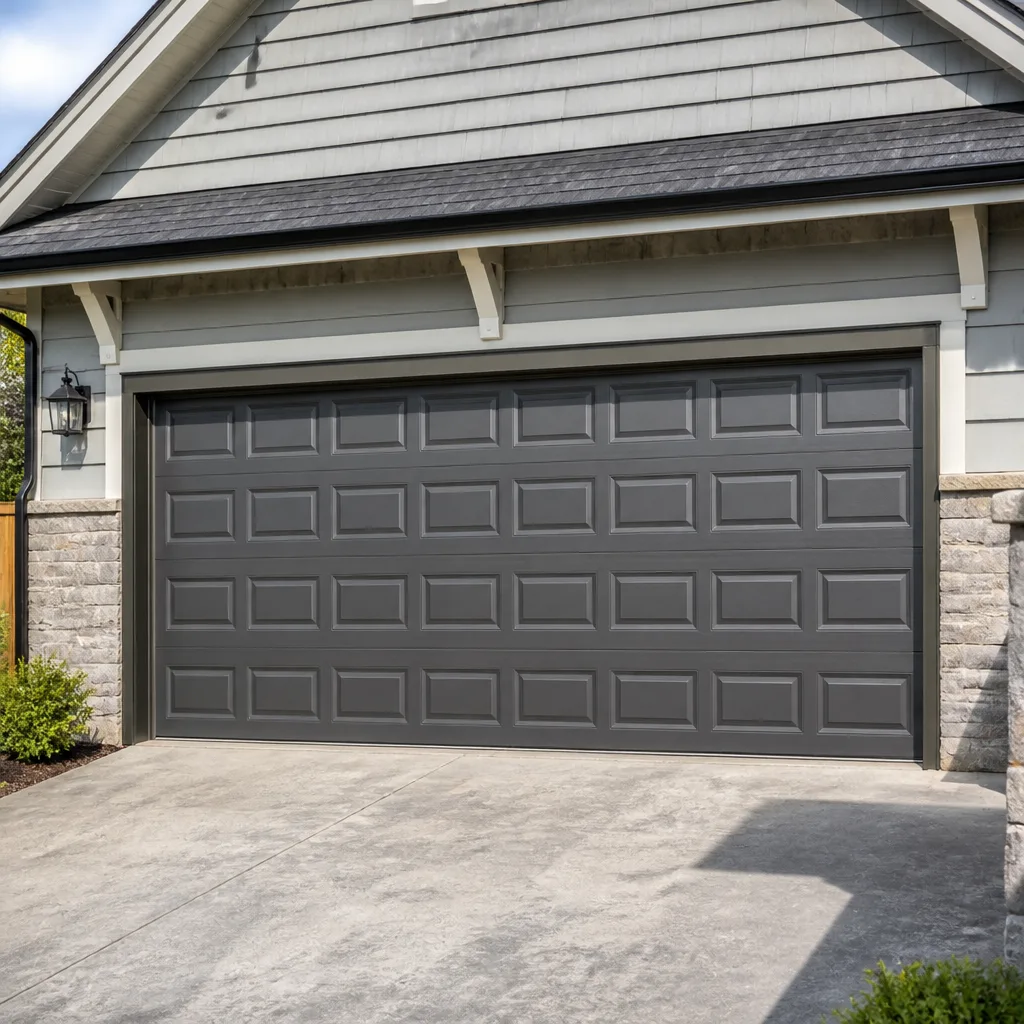 Raised-panel steel
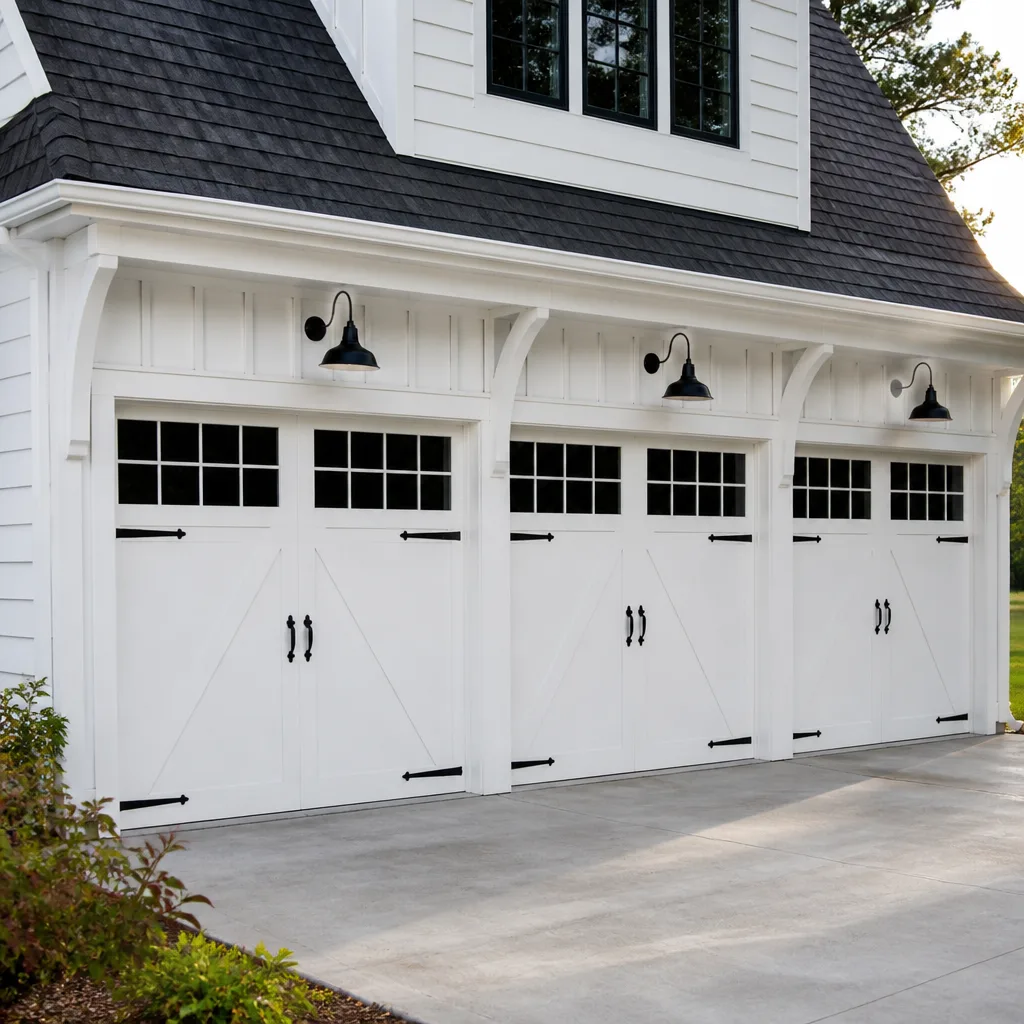 Carriage house
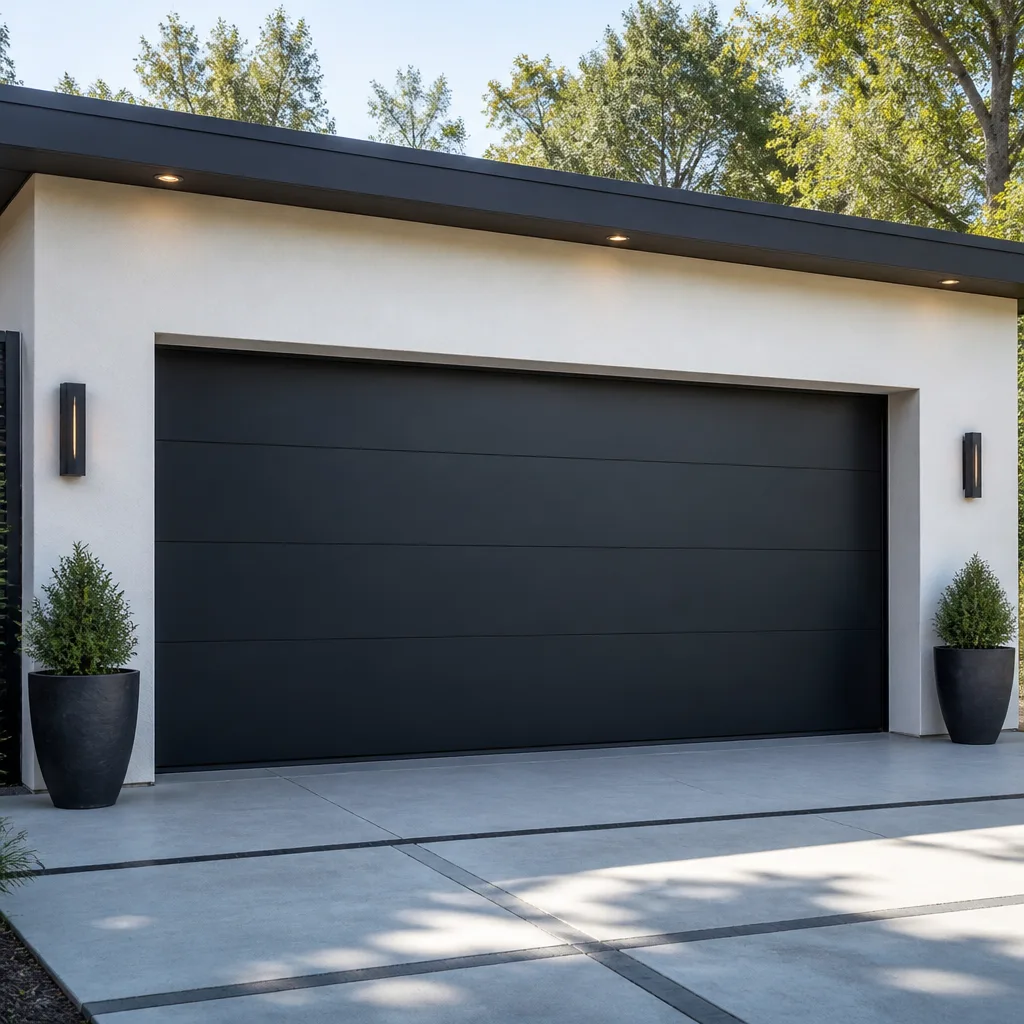 Modern flush
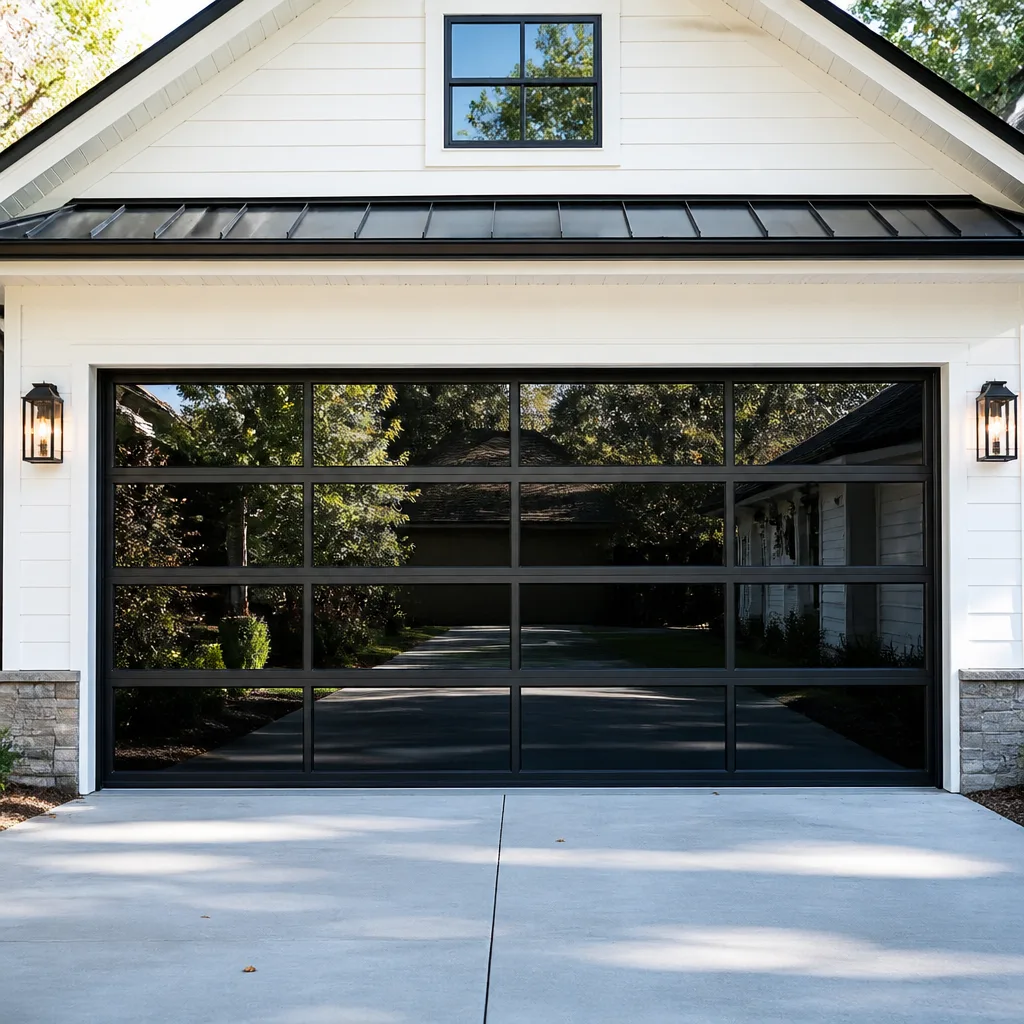 Full-view glass
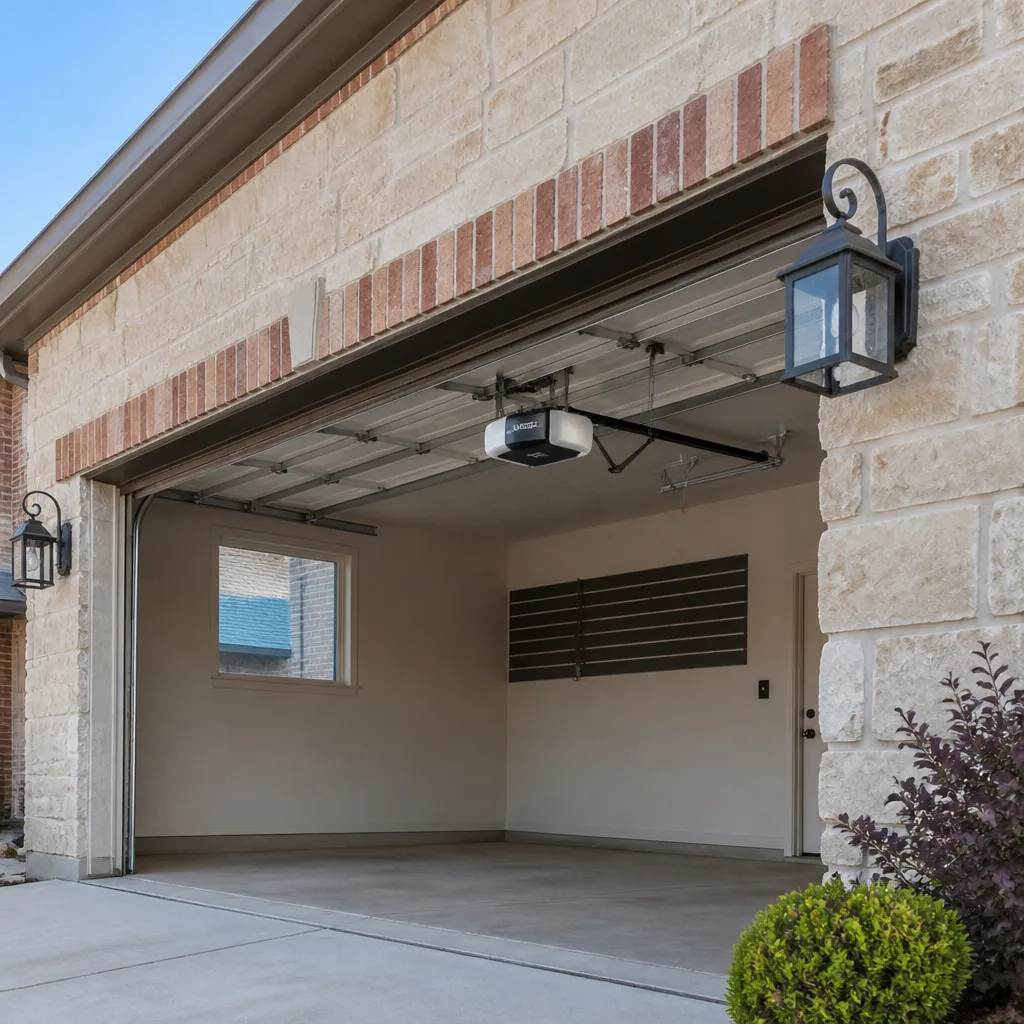 LiftMaster openers
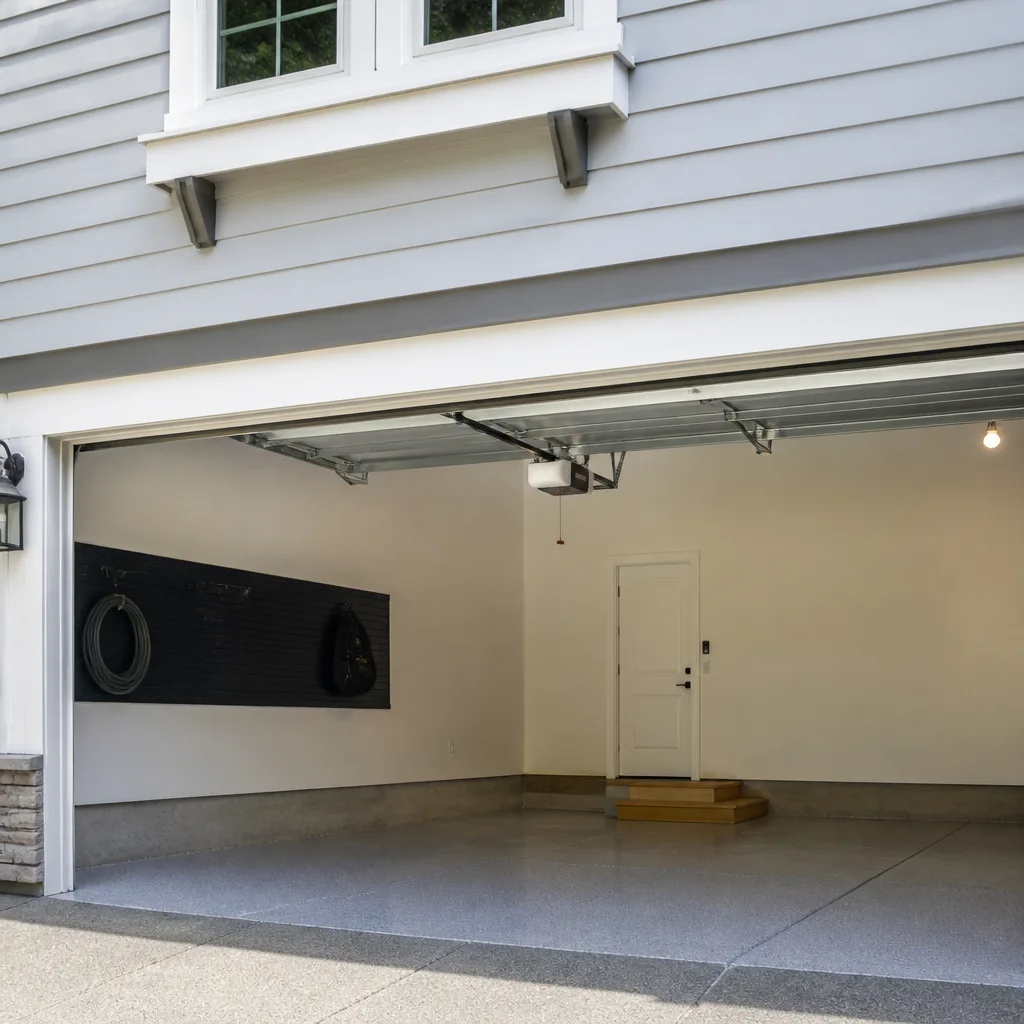 Chamberlain openers
Full 25-point door and opener safety check with every visit - springs, cables, rollers, tracks, and your LiftMaster or Chamberlain opener included
You get a price before we start. It does not change when the pro arrives.
Get your free estimateHow to Hire a Garage Door Contractor in Dayton: A Step-by-Step Guide
Most homeowners in Dayton hire a garage door contractor the same way they’d pick a restaurant: they open a map, sort by star rating, and call the top result. That logic fails here. A contractor with hundreds of glowing reviews who mostly installs one brand of door can still be the wrong hire for your home if your garage runs a legacy opener you inherited with the house, or a torque-master style system that needs a specific method to adjust safely. Brand familiarity and service scope matter more than review volume. This guide walks you through verifying registration, testing a contractor’s actual system knowledge by phone, reading quotes line by line, and knowing when a second opinion is worth the money.
Quick Answer
To hire a garage door contractor in Dayton, verify three things before anyone comes out: that the contractor is registered with the Ohio Secretary of State, that they carry general liability coverage appropriate for overhead door work, and that they can tell you how they handle both torsion and extension springs on your specific opener brand. After that, compare quotes line by line and confirm the labor warranty in writing. Price and reviews should be the last filters, not the first.
Styles & brands we work with
- Raised-panel steel
- Carriage house
- Modern flush
- Full-view glass
- LiftMaster openers
- Chamberlain openers
Table of Contents
- Why Brand Specialization Beats Review Volume
- How to Verify Ohio Registration and Insurance Coverage
- Three Diagnostic Questions That Reveal a Generalist
- How to Read a Garage Door Quote Line by Line
- Understanding Warranty Terms: Parts vs. Labor
- How to Get a Second Opinion on a Diagnosis
- What Dayton Weather and Housing Mean for Scheduling
- Emergency Repair vs. Scheduled Replacement
Why Brand Specialization Beats Review Volume
A garage door is a system, not a single part. The panels, springs, tracks, cables, and opener all interact, and every manufacturer builds that system to its own tolerances. A LiftMaster opener pairs its travel limits and force settings differently than a Genie unit does, and a Clopay door’s panel weight changes what spring rating the hardware needs. A contractor who knows one brand well but treats every door the same will guess at the rest.
When you’re evaluating a garage door contractor in Dayton, brand familiarity is a question you can test directly. Ask which opener brands they service most often. A specialist will name several without prompting and can explain where the models differ. A generalist usually says “all brands,” which sounds good but tells you nothing.
We work on LiftMaster, Chamberlain, Genie, Clopay, Amarr, Wayne Dalton, Craftsman, and Raynor equipment. That coverage matters most in older Dayton neighborhoods, where a home can carry a Clopay door installed years ago and paired with a Craftsman opener that’s since been discontinued. You don’t want a contractor learning your system in your driveway. You want one who already knows where the tension adjustment sits and what a normal amount of slack looks like.
This isn’t a knock on general handyman services. It’s a scope question. Garage door work splits into two categories: the door system itself and the opener and drive mechanism. A contractor who only handles openers will hand you off to someone else the moment a spring fails. A single-source contractor handles both, which means your garage door repair doesn’t stall while two companies trade responsibility for the same problem.
The practical test is simple. Describe your setup on the phone and listen for a specific answer. If a contractor asks about the door material, approximate weight, opener age, and spring type before giving you any price, that’s a good sign. If they quote a number before asking a single question, they’re not diagnosing anything.
How to Verify Ohio Registration and Insurance Coverage
Ohio doesn’t license garage door contractors under a single statewide trade license the way some states do. That means your verification has to be deliberate instead of assumed. Start with the basics, then move to the coverage questions that actually protect you.
- Check business registration. Search the contractor’s business name on the Ohio Secretary of State website. A legitimate operation is registered as a business entity. If the name doesn’t come up, ask why.
- Ask for a certificate of insurance. Request a current certificate of general liability insurance directly from the contractor’s insurer or agent, not just a photocopy from the contractor. The certificate should name the policyholder matching the business you hired.
- Confirm the coverage limits in writing. For garage door work, ask specifically what the general liability limit is per occurrence. Ohio’s rules for residential contractors set minimum thresholds, and a serious overhead door failure can damage a vehicle or a home’s structure. A policy with very low limits won’t cover a real claim. Ask the number and get it in writing rather than accepting “we’re fully insured.”
- Ask about workers’ compensation. If the crew is injured on your property and the contractor doesn’t carry workers’ comp, the exposure can land on your homeowner’s policy. Ask for proof, not a verbal assurance.
- Confirm the entity name on the quote. The name on the written estimate should match the insured business. A mismatch between the quote, the insurance certificate, and the registration is a reason to slow down.
None of this is hostile. A contractor who carries proper coverage will have the certificate ready and will appreciate that you asked, because it separates them from the operators who don’t. When you’re comparing garage door contractors in Dayton, the ones who hesitate on the insurance question are telling you something useful.
There’s a second layer worth understanding. General liability protects your property and the contractor’s business. It doesn’t cover injuries to the contractor’s own workers – that’s workers’ comp. Ask about both. Spring work in particular is dangerous, and a crew without proper coverage working over your car is a risk you’d rather not hold.
Three Diagnostic Questions That Reveal a Generalist
You can separate a specialist from a generalist in a five-minute phone call. These questions don’t require you to know anything about garage doors – they’re designed so the answer tells you what you need to know.
Question 1: “Do you handle torsion springs, extension springs, or both?”
Every garage door uses one or the other. Torsion springs mount on a shaft above the door and handle most modern residential doors. Extension springs run along the sides. The two require different tools, different safety procedures, and different replacement parts. A contractor who answers vaguely, or who only handles one type, may be about to subcontract your job or learn on it. We explicitly handle both, because a single-family home in Dayton can have either depending on the door’s age and construction.
Question 2: “What’s the difference between the way a LiftMaster and a Genie opener sets its travel limits?”
You don’t need to know the answer. You need to hear whether the contractor does. A specialist will start describing the difference between a screw-driven or belt-driven unit and its limit-setting process. A generalist will say something like “they’re all pretty similar.” Openers aren’t all similar. Travel limits, force settings, and safety reverse behavior differ enough that a bad adjustment on one brand can cause the door to reverse mid-travel or fail the photo-eye test.
Question 3: “What does your quote include, and what does it leave out?”
This is a competence question disguised as a pricing question. A contractor who can name every line – springs, hardware, cables, labor, disposal, safety inspection – is telling you their estimate is real. A contractor who says “we’ll figure it out when we get there” is giving you a floor, not a price.
If you want to run these questions instead of digging through reviews, that’s a faster filter than any rating. A contractor who can answer all three on the phone is almost certainly one who can diagnose your door the first time. Our own background helps here: our technicians have up to 12 years of experience across the major brands, and we’ve seen what happens when a contractor guesses wrong. You don’t have to take our word for it – run the questions yourself on any contractor you’re considering in Dayton.
How to Read a Garage Door Quote Line by Line
A quote is only useful if every line is specific. “Repair garage door” is not a line item. “Replace one torsion spring, 0.207 wire, 2-inch inside diameter” is. When you collect estimates from garage door contractors in Dayton, the structure of the quote tells you as much as the total.
Here’s what a properly structured quote looks like, and what the warning signs are:
- Springs priced per piece vs. per pair. A tag that just says “springs” with a single price is a red flag. Garage doors use matched pairs of springs, and they’re replaced together because a worn spring and a new one won’t share the load evenly. A quote should either price one spring clearly, or price a matched pair as the set. Ask which you’re getting.
- An unlabeled “hardware fee.” Hardware isn’t a category – it’s a list of parts. Ask what’s included: hinges, rollers, bearing plates, end plates, drums, cables. A vague fee is a place where a quote can grow after the fact.
- Missing disposal line. Old springs, cables, and panels have to go somewhere. If disposal isn’t listed, you may be charged separately for it later, or it may simply be added to the invoice. Ask.
- No safety inspection line. A proper repair involves checking the door’s balance, the opener’s force setting, and the safety reverse. A quote without any inspection step is a quote for a part swap, not a repair.
- Price that only applies to one part. “We can do the springs for X” can mean the opener or the cables need separate work. Ask for a quote that covers the whole job as diagnosed, and a separate line for anything that’s optional.
- No written price. A verbal quote isn’t a quote. Everything should be in writing with the price agreed before any work begins. That’s the standard we hold to, and it’s the standard you should hold any contractor to.
One more note about the cost side. Most garage door problems are repairable for a modest amount, but a quote for spring work should be clearly split between one spring and a pair. If a contractor gives you a single range that seems to cover everything, ask what happens if only one spring needs replacing – or if both do. The answer should be clear.
Understanding Warranty Terms: Parts vs. Labor
Warranties come in two pieces, and they’re rarely equal. The parts warranty is usually the one a contractor mentions first because it sounds generous – a manufacturer may back the part itself for years. The labor warranty is the one that actually protects your wallet, and it’s the number more likely to be short.
Ask explicitly: “What’s the labor warranty on this repair, and what does it cover?” A good answer names a specific period and states whether it covers the part failing, the installation failing, or both. A bad answer is “it’s covered” with no period mentioned.
Springs are a good example. When a garage door repair replaces a torsion spring, the part may carry a manufacturer warranty measured in years, while the labor to install it may be covered for a much shorter window, sometimes only weeks or a few months. Those are two different promises. Get both in writing on the estimate, not just in a brochure.
The same logic applies to openers. A LiftMaster opener may carry a manufacturer warranty covering the motor and the control board, but the labor to diagnose and reinstall it is a separate coverage question. If the opener fails under the manufacturer’s warranty, does the contractor handle the claim, or do you?
Ask what happens if the repair fails during the labor warranty period. The right answer is that the contractor comes back at no charge. The wrong answer involves a “diagnostic fee” to look at work they just did. For a full installation, the warranty split matters even more – you’re investing in a system that should last, and the labor coverage should reflect a real commitment to the installation.
Finally, ask whether the warranty is transferable if you sell the house. Many aren’t. If you plan to sell in a few years, it’s a useful question, and it tips you off to how the contractor thinks about their work.
How to Get a Second Opinion on a Diagnosis
A second opinion is worth the cost when the first diagnosis involves a large repair, a recommendation to replace instead of repair, or a problem that has returned after a fix. It’s usually not worth it for a straightforward spring swap or a quick opener adjustment.
The trick is getting a second opinion without tipping off the first contractor. Here’s how to do it cleanly:
- Don’t mention the other contractor’s diagnosis. Describing the door’s symptoms fresh (“the door goes up about a foot and stops”) gets you an independent read. Describing someone else’s conclusion (“they said it needs a new opener”) pulls the second contractor toward agreeing or contradicting on purpose.
- Ask the second contractor to walk you through what they see. A diagnosis should reference specific components: spring condition, cable tension, opener force setting, balance. If the explanation is vague, that’s the thing to note, not just the price.
- Compare the diagnoses, not just the totals. Two contractors can quote different prices and still both be right. What you’re looking for is whether they agree on the cause. If one says the springs are worn and the other says the opener is failing, you’ve found the question you need answered before you spend money.
- Get both in writing. A verbal second opinion is hard to compare against a written quote. Ask for the diagnosis and the price on paper.
- Watch for the upsell. If the first contractor recommended full replacement and the second says repair will do, that’s your answer. If it’s the reverse, ask the second contractor why – replacement is sometimes the cheaper path over time, but the reasoning should be specific.
There’s a cost to a second opinion, and we won’t pretend otherwise. But on a repair that involves several components or a full replacement decision, the cost of getting it wrong is higher. If you’re weighing whether to install a new door or repair what you have, that’s exactly the kind of decision worth a second set of eyes.
The cleanest version of a second opinion is a contractor who isn’t trying to sell you anything in the moment. Ask for a diagnosis and a written estimate, and nothing more.
What Dayton Weather and Housing Mean for Scheduling
Dayton’s garage doors see real seasonal swings. Summers run hot and humid, winters bring freeze-thaw cycles, and spring brings heavy rain. That matters because garage door hardware is mostly metal moving against metal, and temperature changes affect tension, lubrication, and the way a door settles.
Cold weather is hard on springs and openers. A torsion spring that’s near the end of its life is more likely to fail in a cold snap than on a mild day, because metal becomes more brittle as temperatures drop. The opener’s force setting may also need adjustment as the door’s tracks and rollers tighten up in the cold. If your door gets stiff or noisy every winter, that’s a signal it’s worth a check before the next cold season.
Summer heat and humidity are easier on springs but harder on the door’s finish and the opener’s electronics. A garage that gets very hot can stress the opener’s control board, and humidity can cause wooden door panels to swell. If your door sticks in summer, the problem is often alignment, not the opener.
Dayton’s housing stock adds another wrinkle. Older neighborhoods have garages built decades ago, often with narrower single-car doors, legacy openers, and hardware that’s been repaired piecemeal over the years. Those homes often have a mixed system – a newer opener paired with original springs and tracks – which means a contractor has to know how to service both halves. That’s where brand coverage matters: a Craftsman opener that’s been out of production for years can still be serviced if the contractor knows the platform.
For scheduling, the practical advice is to book before you need it. Spring replacement is a repair you can plan, and doing it before the cold season avoids the scenario where a door fails on a morning when you least want to deal with it. Our garage door opener repair work covers both the old and the newer platforms, so a diagnostic visit can usually address the whole system in one trip.
Emergency Repair vs. Scheduled Replacement
The two kinds of garage door work follow different rules, and mixing them up is a common source of frustration. Repair – springs, cables, openers, track alignment – can often be handled quickly, sometimes the same day, because the parts and the expertise are already in hand. Installation and replacement are different: a new door has to be measured, ordered, and scheduled, and a good contractor won’t promise a same-day install.
If your door won’t open in the morning and your car is trapped, that’s an emergency repair. Call and describe the symptom precisely: will the door move at all, does the opener run but the door doesn’t move, is the door stuck open, is a cable visibly off its drum? The more specific you are, the faster the contractor can decide what to bring. We answer 24/7 and dispatch from 7am to 7pm, Sunday through Friday, and we’re closed on Saturday.
A word of caution on springs and cables. These are the dangerous parts of a garage door, and a failed torsion spring or a snapped cable under tension is not a DIY job. If a spring has broken, or a cable has come loose, don’t try to open or close the door manually. Call a trained professional, because the stored energy in a wound spring can cause serious injury.
If a door is simply old, dented, or past repair, replacement is the right call. That’s a scheduled job – measurement, a written quote, an order, and an install date. For a homeowner planning a replacement, the timeline is measured in days to weeks rather than hours. The key is not to let a repair turn into an emergency call for a problem that could have been planned.
If you’re not sure which category you fall into – a failed opener on a door that’s otherwise healthy, for example – call and ask. A short phone diagnosis usually settles it, and a free estimate is the right starting point either way.
Common Mistakes to Avoid
- Choosing by star rating alone. A contractor with a strong local reputation who mainly services one brand may be the wrong fit for a different system. Ask about your specific door and opener before you book.
- Accepting a per-spring quote without asking about the pair. Springs are replaced in matched pairs. If the quote prices a single spring and doesn’t state what happens to its partner, ask before work starts.
- Skipping the insurance check. In Ohio, garage door work isn’t covered by a single statewide trade license, so a certificate of insurance and a business registration search are the checks that matter. Don’t rely on a verbal “we’re insured.”
- Letting the labor warranty go unwritten. A long parts warranty can distract from a short labor warranty. Ask for both in writing, with the coverage period on the estimate itself.
- Ignoring the disposal line. Old hardware has to be hauled away. If it’s not in the quote, plan for it appearing on the invoice.
- Trying to fix a broken spring yourself. Springs and cables are under high tension. This is one repair where the professional is genuinely necessary.
- Waiting until the door fails to schedule. Spring replacement is predictable. Scheduling it proactively before a cold snap is cheaper and less disruptive than an emergency repair in the middle of a busy morning.
See the difference
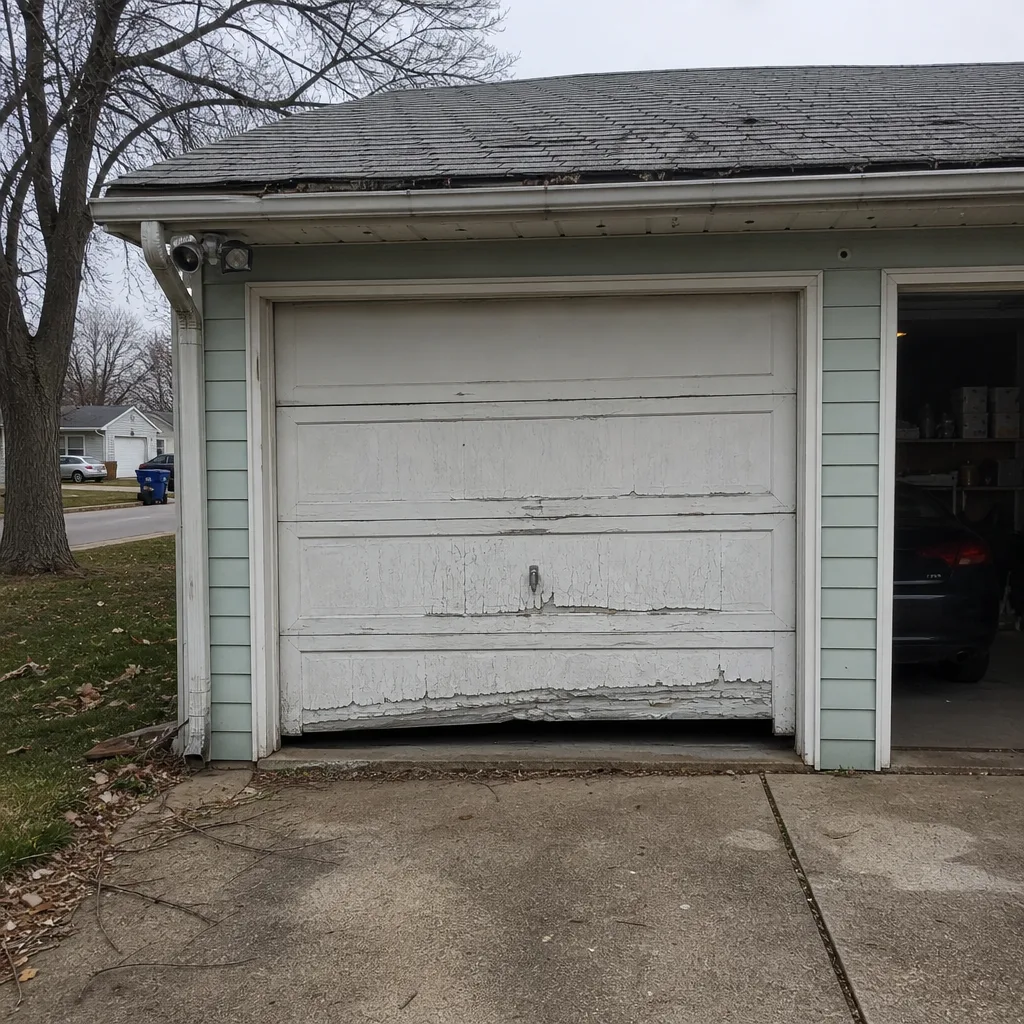 Before
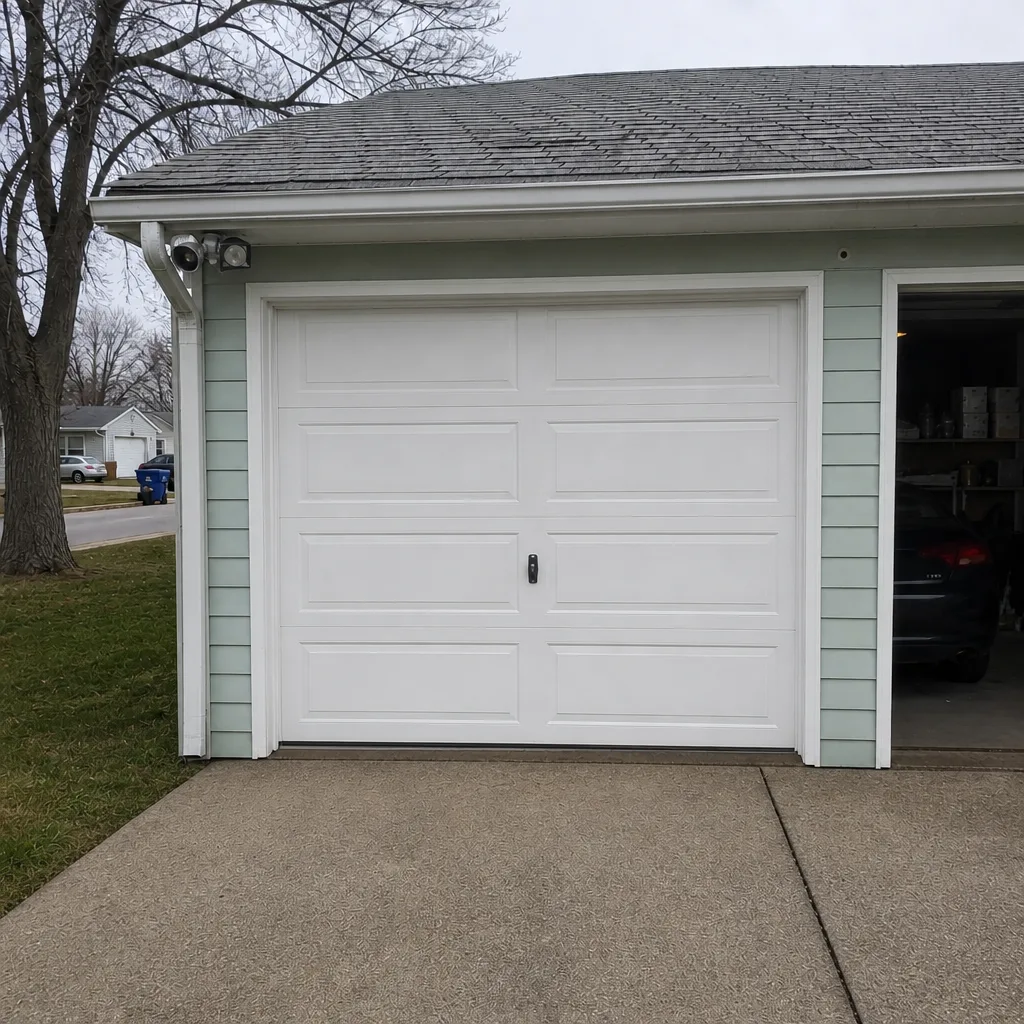 After
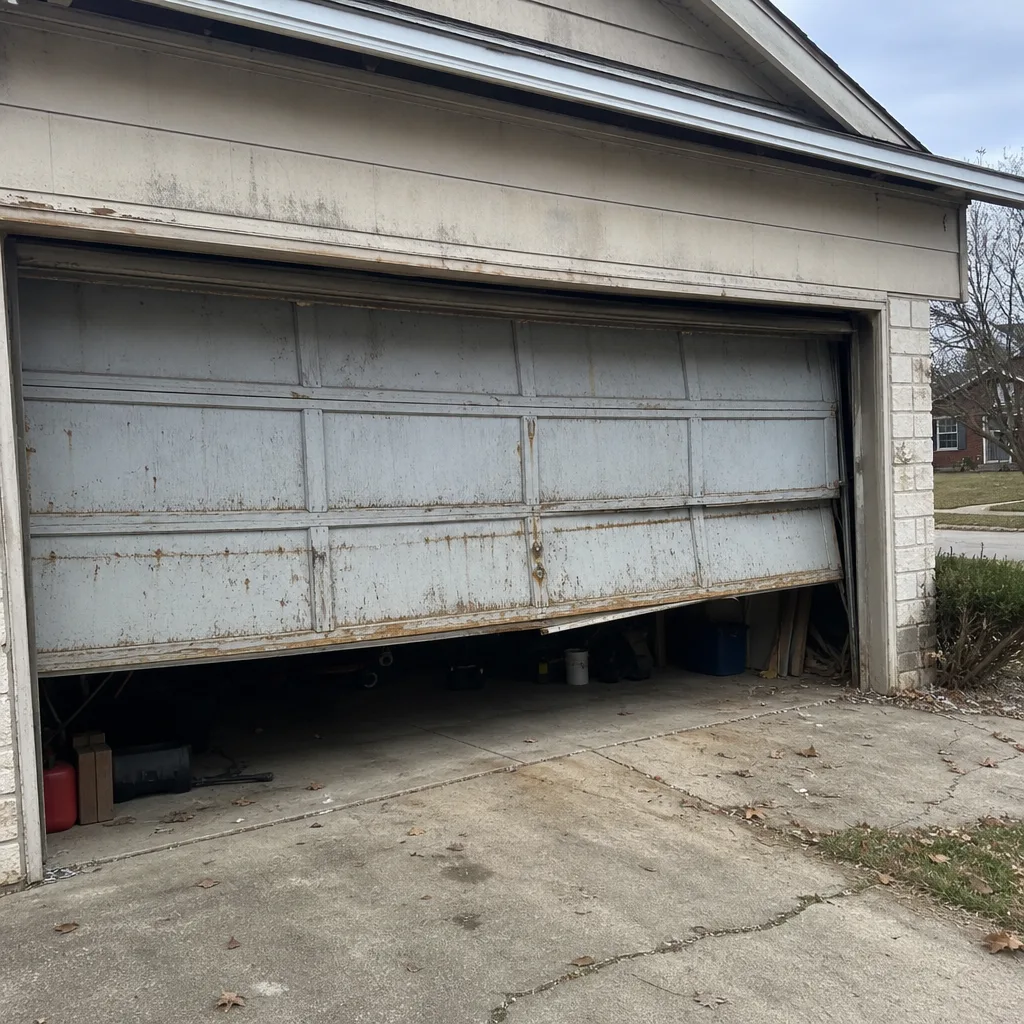 Before
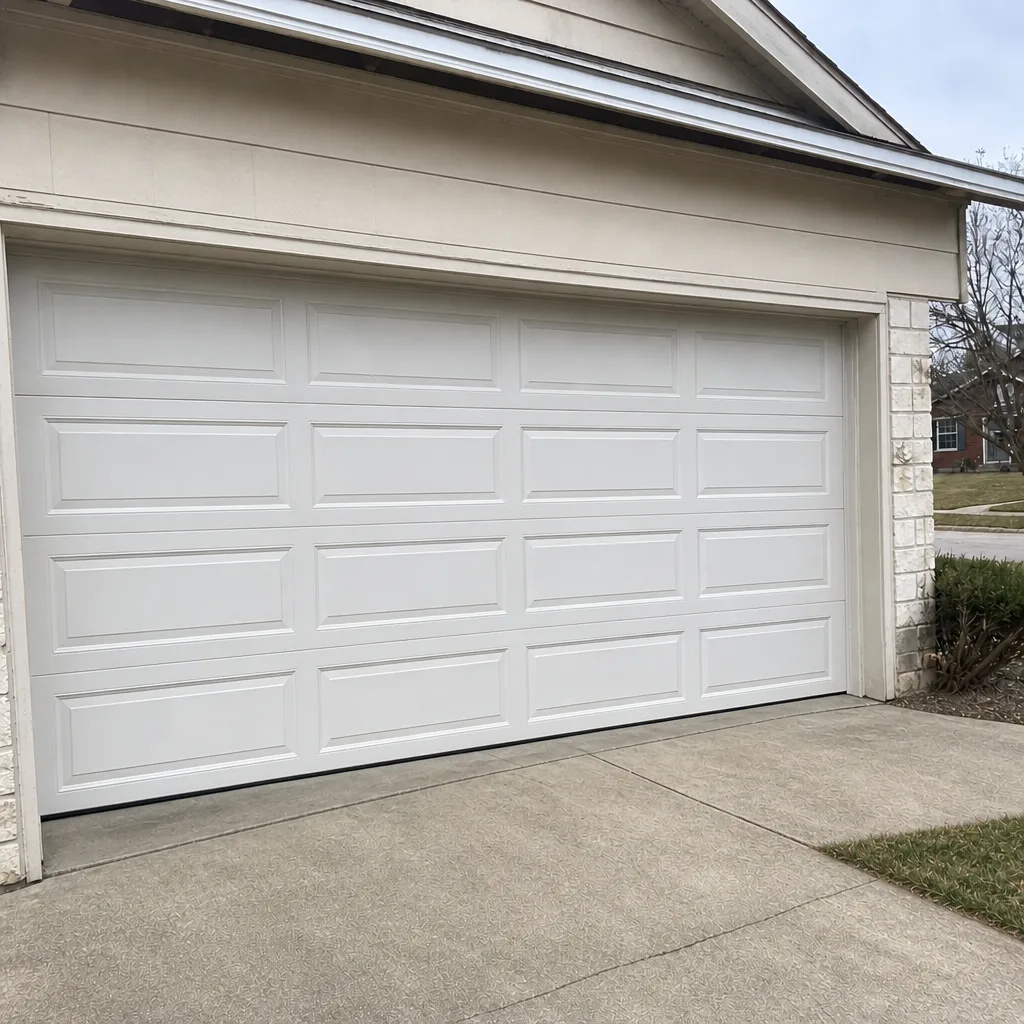 After
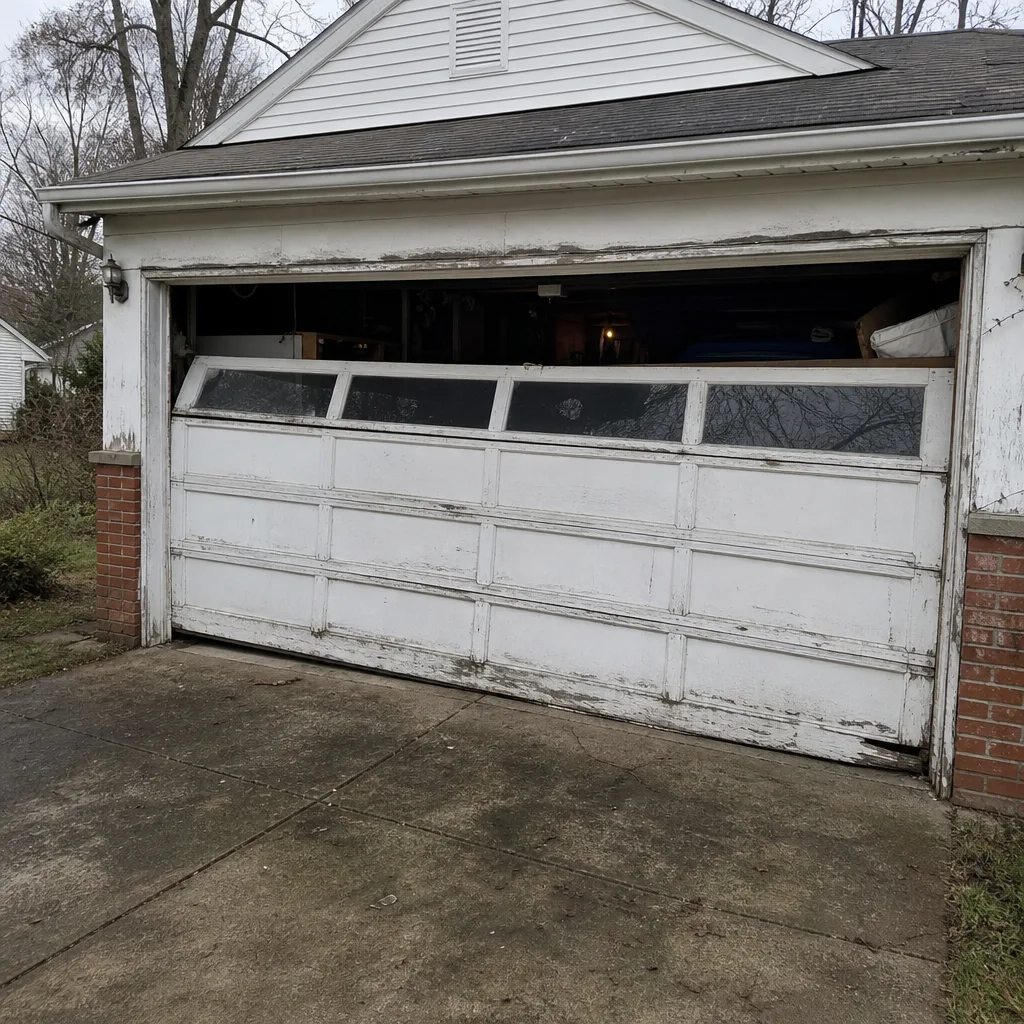 Before
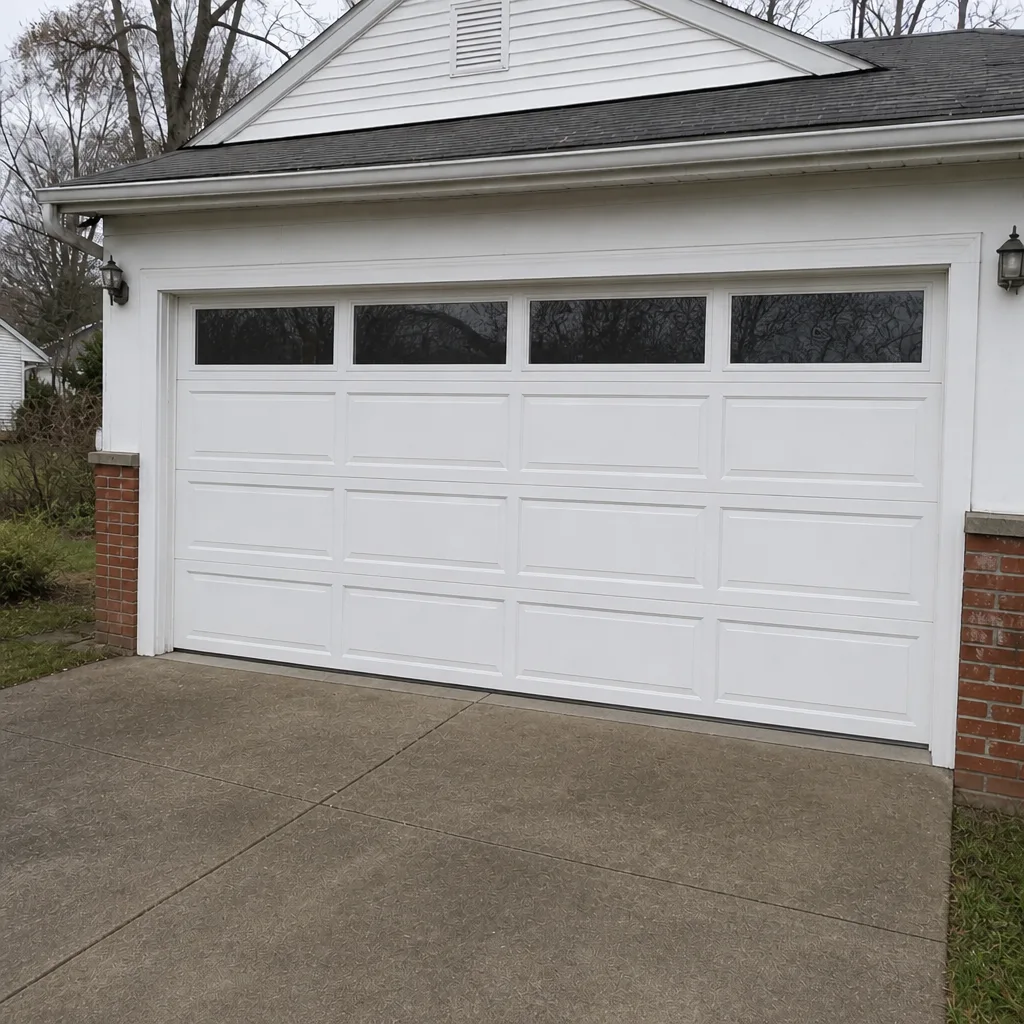 After
When to Call a Professional
Call a professional when the door won’t open or close, when a spring has visibly broken, when a cable is off its drum or looks slack, or when the opener runs but the door doesn’t move. Call when the door reverses before it reaches the floor or fails to reverse on contact with an object. Call when it makes a loud bang and won’t open, or when it comes off its tracks. Call when the door is sagging or sticking on one side. These are the symptoms where a qualified technician saves you time and risk.
Dayton Garage Door Repair Pros offers free estimates in Dayton. Call (866) 937-7781. We answer 24/7, and fast dispatch from 7am to 7pm, Sunday through Friday. Our technicians have up to 12 years of experience and work on LiftMaster, Chamberlain, Genie, Clopay, Amarr, Wayne Dalton, Craftsman, and Raynor equipment.
Frequently Asked Questions
Search the business name on the Ohio Secretary of State website, then ask for a certificate of insurance from the contractor’s insurer showing general liability coverage, plus proof of workers’ compensation. Confirm that the business name on the quote matches the insured name. None of this requires anything from you beyond a phone call and a few questions.
Only if your door and opener are that brand. A single-brand specialist is a fine choice when the system matches; a specialist in the wrong brand is a generalist with better marketing. Ask which brands they service most often, and pick one whose answer includes your equipment.
Some contractors price per spring because that’s how they buy the part, but that structure creates confusion about whether the second spring is included. Garage doors use matched pairs, and a worn spring paired with a new one shares the load unevenly, so both should be replaced together. A clear quote either prices a matched pair as a set or explains exactly what one spring costs and why the other isn’t included. If you’re unsure, ask.
There’s no universal standard, which is exactly why you should ask. The answer you want is a specific period in writing on the estimate, covering the installation itself, with no charge for a return visit if the work fails within it. Ask what a labor warranty claim looks like if the repair fails. A contractor who has to look it up may not be committing to much.
Yes, and it’s worth doing when the first diagnosis calls for a large repair or full replacement. Don’t mention the first contractor’s conclusion; describe the symptoms fresh so the second read is independent. Compare the diagnoses, not just the prices, and get both in writing.
It does. Cold snaps stress springs and can trigger failures in springs that are already near the end of their life, and temperature swings can make a door stiff enough that the opener’s force setting needs adjustment. Booking a spring inspection before the cold season is the practical hedge against a winter failure.
Repair – springs, openers, cables, track work – can often be handled quickly, and a same-day visit is realistic for many of these. Replacement is a scheduled job: the door is measured, ordered, and installed on a planned date. If you’re stuck with a door that won’t open, call (866) 937-7781. We answer 24/7, and we’ll get you booked into the next opening.
The Bottom Line
Hiring a garage door contractor in Dayton comes down to verification before convenience. Check the business registration and insurance, test brand knowledge with three specific questions, read the quote line by line, and get the labor warranty in writing. Lean on brand specialization rather than review count, because the right hire already knows your system. And when a spring or cable fails, treat it as a professional job, because those parts are dangerous. If you’d rather skip the research and start with a free estimate, call (866) 937-7781 or start with our Dayton Garage Door Repair Pros team. We answer 24/7, with fast dispatch from 7am to 7pm, Sunday through Friday. We work on your brand, and we quote the price before any work starts.
Written by the team at Dayton Garage Door Repair Pros.